
Breiter Planet Hydrogen Blog

Iberdrola will build in Puertollano one of the largest green hydrogen plants in Europe

May 5, 2020 9:15:00 AM / by Pilar Sanchez Molina, pv magazine posted in Energy Storage, Decarbonize, Decarbonization, Hydrogen, Spain, Green Hydrogen, Technology, Research & Development, Hydrogen Production, Castilla La Mancha

0 Comments

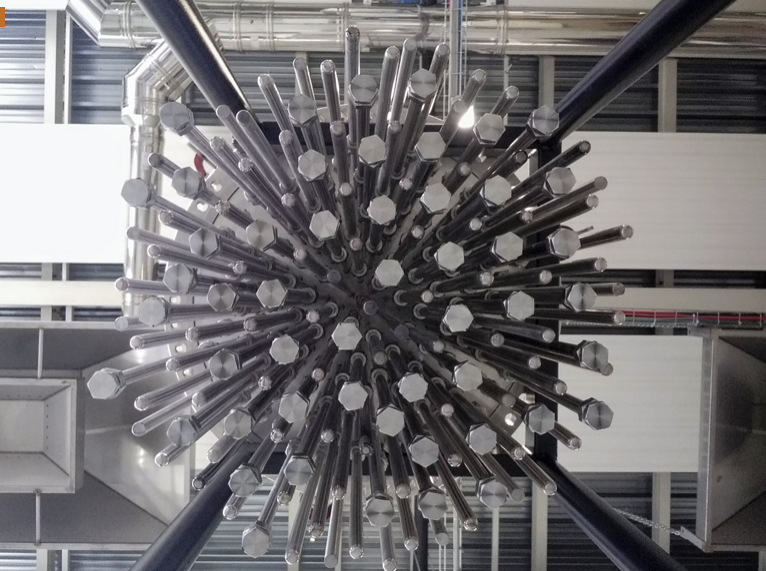
Photo: Tecnalia


Iberdrola will develop a large green hydrogen project from renewable energy sources in Puertollano, according to what the city council has made public, which, in turn, mentions an article published in the economic newspaper Expansión.

The project will involve an investment of up to 150 million euros in a plant that will be one of the largest in Europe of its kind, that is, production of hydrogen from photovoltaic energy, unlike other systems, which are based on fossil fuels pollutants. The group's goal is to achieve decarbonisation and cheaper hydrogen in the future, which is now basically used in industry, but is beginning to have other applications, such as electric vehicles.

According to Iberdrola estimates, published last week by Expansión, the Puertollano plant will consist of a 100 MW experimental photovoltaic plant that will incorporate bifacial panels and string inverters, as well as a 20 MWh lithium-ion battery storage system. and 5 MW. It will also have a green hydrogen production system through electrolysis: divided into stackable modules that allow the plant to be expanded, according to the identified hydrogen demand needs. In this regard, different technologies will be tested: alkaline, proton exchange membrane, and solid oxide.

It will also have a main hydrogen storage system in pressurized tanks and an experimental storage plant for other technologies such as LOHC (organic liquid carrier hydrogen), as well as a control system that allows the optimal balance between renewable production, use of the battery and the energy dedicated to the production of green hydrogen.

Ideal location

"The choice of Puertollano as an enclave to launch the project is not accidental", they explain from the town hall. “It is a strategic place from which Iberdrola will not only be able to produce hydrogen, but will also be able to commercialize it for industrial use to adjacent companies for their production processes. The project will be located on the land that Iberdrola has had in Puertollano for years, and where it had already begun to build the photovoltaic. In Puertollano there is also the National Hydrogen Center. To distinguish itself from other hydrogens, Iberdrola will promote the creation of a green label for those produced with electricity before the authorities ”, they add.

Together with the project, Iberdrola will promote the creation of a 'green' label for the hydrogen produced that ensures that its carbon footprint is zero, thus helping hydrogen users to reduce their CO2 emissions.

The power company claims that decarbonising global hydrogen through its production with renewable electric energy would mean an increase in electricity demand of more than 10%, which would allow for the flood of renewable energy projects that the Government plans to incorporate with the new energy plan. .

Other pioneering projects

This project joins those that have been announced in recent weeks: the green hydrogen production plant in Lloseta, a pioneer in Spain, will start operating from 2021 thanks to the Power to Green Hydrogen Mallorca project, and will allow a generation of up to 10 MW of production.

The Fundación Hidrogen Aragón coordinates a project to promote decarbonisation in Europe: The HIGGS project, which is now being launched in Huesca, will study for 36 months the possibilities of injecting hydrogen into current natural gas networks as a way to reduce emissions of CO2 in sectors difficult to electrify.

Enagás and Ampere will be the first to produce hydrogen with solar energy in Spain: both companies have signed an agreement for the joint development of several R&D projects for hydrogen production with solar and batteries.

Tecnalia, Engie and the University of Eindhoven (TUe) create in Bizkaia H2SITE, a startup to produce green hydrogen on site.


Green Hydrogen has serious potential to accelerate the transition to clean sources of energy. Schedule a call with us to see how we could work together: 

 

SCHEDULE A CALL WITH US


This article originally appeared on pv-magazine-spain.com, and has been republished with permission by pv magazine (www.pv-magazine.com and www.pv-magazine-spain.com).

Read More

QUT to drive green hydrogen export through LNG-focused research center

Apr 28, 2020 9:15:00 AM / by Marija Maisch, pv magazine posted in Policy, Politics, Energy Storage, Markets, Finance, Decarbonize, Decarbonization, Hydrogen, Green Hydrogen, Australia, Technology, Electrolysis, Research

0 Comments

Hydrogen from electrolysis is often described as the missing link in the energy transition.

Image: Roy Luck/Flickr


As the momentum is building behind hydrogen in Australia and abroad, the Queensland University of Technology (QUT) is leading the way in research and development with a range of initiatives on the ground. After it played a key role in Australia’s first green hydrogen shipment to Japan, QUT is now readying to drive the green hydrogen export industry through the Future Energy Exports Cooperative Research Centre (FEnEx CRC).

Officially established on Friday, the FEnEx CRC is a national collaboration of 28 industry, government, and research partners. As announced on Friday, the center won the backing of the Federal Government to the tune of $40 million, which builds upon a further $122 million in support from industry, state governments, and research organizations.

The CRC’s core mission is to ensure Australia’s LNG industry remains competitive, reduces its environmental footprint, and helps to grow hydrogen exports for new emerging markets. Its foundation project will be establishing the LNG Futures Facility, a 10 tonne-per-day research and teaching plant to be based at Kwinana, in Western Australia.

“FEnEx CRC will undertake cutting-edge, industry-led research, education and training to help sustain Australia’s position as a leading LNG exporter, and enable it to become the leading global exporter of clean hydrogen,” Professor Eric May, UWA’s Chevron Chair in Gas Process Engineering and FEnEx CRC Acting CEO, said. “Our established LNG sector is a key advantage in the race to grow a hydrogen export industry because of the similar workforce skills, engineering standards, shipping routes, and business relationships.”

But while Professor May has spoken about “clean” hydrogen, there has been no indication that this hydrogen will be truly clean and produced by electrolysis using solar or wind electricity. He said the CRC would support Australia’s National Hydrogen Strategy, which remains “technology-neutral”, with both hydrogen produced using renewable energy and the one via fossil fuels with “substantial” carbon capture and storage (CCS) in the game.

Throughout the consultation process last year, Chief Scientist Alan Finkel continued to push Australia toward hydrogen produced by solar and wind, but also remained attached to the fossil fuel-CSS idea. The stance was reflected in the Strategy itself.

Green hydrogen push

Nonetheless, Professor Ian Mackinnon, from QUT’s Institute for Future Environments, said FEnEx would build on the extensive work QUT had already done in the green hydrogen sphere, including partnering with Japanese company JXTG to produce and export green hydrogen to Japan and leading a $7.5 million research project to establish a renewable energy pilot plant producing green hydrogen at the Redlands Research Facility. This latter project is supported by four universities, Japanese and Australian corporations, the Queensland Government and the Commonwealth agency, ARENA.

“The FEnEx CRC is an excellent opportunity to translate the skills from one industry, and to build another export industry in the world of green hydrogen storage and utilization,” Professor Mackinnon said. As part of the FEnEx CRC, QUT’s Professor Mackinnon and Professor Anthony O’Mullane will be working on research projects involving the hydrogen export and value chains.

“This complements QUT’s activities in developing a renewable energy facility at Redlands to power the production of hydrogen using various electrolyser technologies,” Professor O’Mullane said. “This program will enable the next generation of scientists and engineers with the key skills for the transition to renewable power generation, storage, transport and utilisation. This CRC will accelerate efforts in the development of cheaper, more stable catalysts for rapid deployment in commercial scale electrolysers to produce green hydrogen.”

Another QUT professor, Rachel Parker will lead the Market Development Program in the FEnEx CRC, which will aim to identify the strongest global market opportunities for the development of Australia’s future energy exports. “The market development program will identify the business and social drivers and barriers to the adoption of technologies developed through the other CRC programs and will maximise the market and social benefits from the rapidly changing technological and industrial context of energy,” she said.

Read More

Hydrogen is the first viable option for seasonal storage

Apr 21, 2020 9:15:00 AM / by William Driscoll, pv magazine posted in California, Energy Storage, World, Grids, Integration, Utah

0 Comments

Plan for storing hydrogen in Utah salt caverns

Images: Los Angeles Department of Water and Power


Seasonal storage of hydrogen to balance renewable generation will be cost-competitive in 2050, says DNV GL, a Norway-based consulting firm that advises the energy and shipping industries.

The firm modeled nonstop production of hydrogen every summer, using electrolysis units powered by market electricity. The hydrogen would be compressed and stored underground in salt caverns or depleted gas fields, and the following winter would be converted nonstop to electricity, using fuel cells. Daily balancing would be achieved using batteries and pumped hydro. To the extent the entire grid ran on renewables in the summer, the hydrogen would be “green,” or renewably produced.

A project along these lines is under development in Utah, and would use underground salt caverns to store hydrogen. The hydrogen would be renewably produced by 2045, to help Los Angeles achieve its renewables goal.

The DNV GL study also considered hydrogen produced on another continent using solar power, stored either as-is, or after conversion to ammonia or synthetic methane, and shipped to its destination each winter. These options (bars 3 to 5 below) have costs more than double that of locally produced hydrogen (bar 6), as they involve more steps, each with its own costs. All options were compared to wintertime combustion of natural gas with a carbon tax, pegged at 54 euros per metric ton of carbon dioxide (bar 1).

DNV GL projects that a seasonal storage business will be preceded by a market for synthetic fuels. This is the case in the Utah hydrogen storage project, where plans for the early project years call for hydrogen to be mixed with natural gas for combustion in gas turbines.

DNV GL also projects that in 2050, ample short-term storage capacity will be available, in the form of grid batteries, electric vehicle-to-grid applications, and pumped hydro, “to accommodate daily and weekly cycles” in both renewable generation and electricity demand.


DNV GL’s report, The promise of seasonal storage, includes an appendix showing capital and operating costs for all technologies evaluated.


Interested in seeing if Green Hydrogen can work for you? Reach out to us and schedule a call for more information:


SCHEDULE A CALL WITH US


This article originally appeared on pv-magazine-usa.com, and has been republished with permission by pv magazine (www.pv-magazine.com and www.pv-magazine-usa.com).

Read More

UNSW hydrogen storage technology to debut at community solar farm

Apr 7, 2020 9:15:00 AM / by Marija Maisch, pv magazine posted in Community, Energy Storage, Finance, Installations, Community Solar, Hydrogen, Green Hydrogen, Highlights, utility scale storage, Australia, Grids, Integration, New South Wales

0 Comments

Providence Asset Group's Mr Llewellyn Owens, NSW Energy Minister Matt Kean, UNSW's Professor Kondo-Francois Aguey-Zinsou.

Image: UNSW


More than $15 million in funding from the state government’s Regional Community Energy Fund was announced on Tuesday to help regional communities in New South Wales (NSW) take control of their energy bills and benefit from the economic opportunities presented by the energy transition. The awarded projects will unlock nearly 17.2 MW in electricity generation and up to 17.9 MW/39.3 MWh of energy storage, leveraging approximately $36 million in private investment.

Six projects will install solar, four of which will collocate battery storage on site, and one will deliver a shared community battery scheme.  The list of approved projects includes 5 MW Bayron Bay Solar Farm alongside a 5 MW / 10MWh DC-coupled battery; 500 kW Gloucester Community Solar Farm; the Goulburn Community Dispatchable Solar Farm involving 1.2 MW of solar PV and 400 kW / 800 kWh of battery storage; 1 MW Haystack Solar Garden; Orange Community Renewable Energy Park with a 5 MW solar farm and up to 5 MW / 5 MWh of battery storage; and a 1 MW / 2MWh battery, which will be installed under Enova Community’s Shared Community Battery Scheme for regional NSW.

A project that stands out in the group for its combination of on-site renewable energy technologies is the Manilla Community Solar. The development will feature 4.5 MW of solar PV, 4.5 MW / 4.5MWh of battery storage and a 2 MW /17 MWh hydrogen energy storage system. It will be backed by a $3.5 million grant that has been awarded to the Manilla Solar Project, a partnership between Manilla Community Renewable Energy and green investment outfit Providence Asset Group.

Plans for the Manilla solar farm were announced in December as one of the first of up to 30 community solar initiatives to be rolled out across regional Australia. On Tuesday, it was confirmed that the development will feature an advanced hybrid battery storage system in addition to the solar and battery storage components. According to UNSW, solid-state hydrogen technology will be installed in 20-foot containers with an energy density of 17 MWh and will be a first of this kind in the world in terms of scale.

New generation of batteries

The technology was first unveiled last March when a team of researchers at UNSW headed by Professor Kondo-Francois Aguey-Zinsou said they had developed a unique system that allowed for cheap storage and transportation of hydrogen and could provide a new alternative for energy storage within two years.

Their research, conducted in partnership with H2Store, had been underpinned with $3.5 million in backing from Providence Asset Group. The funding was intended to help the team deliver phase one of a four-stage project that includes the creation of prototypes of their hydrogen energy storage solution for residential and commercial use, demonstration units, and testing and optimization that will enable full commercialization of the product.

Speaking about the first phase of the project, Professor Kondo-Francois Aguey-Zinsou said that he believed his invention would offer significant advantages over current power storage solutions for home solar systems, such as the Tesla Powerwall battery.

“We will be able to take energy generated through solar panels and store it as hydrogen in a very dense form, so one major advantage of our hydrogen batteries is that they take up less space and are safer than the lithium-ion batteries used in many homes today,” he said, adding that the system can actually store about seven times more energy than other that are currently available. Other advantages include a lifespan of about 30 years compared with under 10 for other systems and no fire risk.

On Tuesday, Professor Aguey-Zinsou said: “I am very excited to see the technology we developed in the lab here at UNSW scaled up and used in real-world applications. It will prove the feasibility of hydrogen storage at scale and position Australia to become a major player in transitioning to renewable energy.”

Construction will commence on the Manilla Solar Project in the second half of 2020 and is expected to be operational early 2021. The storage component will be installed during 2021.


Interested in how hydrogen storage can be incorporated into your solar facility? Schedule a call with us:


SCHEDULE A CALL WITH US


This article originally appeared on pv-magazine-australia.com, and has been republished with permission by pv magazine (www.pv-magazine.com and www.pv-magazine-australia.com.)

Read More

Hydrogen production coupled to solar and storage to debut in Spain

Mar 24, 2020 9:15:00 AM / by Pilar Sanchez Molina, pv magazine posted in Energy Storage, Installations, Energy Efficiency, Hydrogen, Spain, Highlights, World, Global Warming, Technology, Electrification, Sustainability, Industrial PV, Commercial PV, Analysis, Environmental Impact

0 Comments

The project will be the first hydrogen injection experience in a real gas network in Spain with support for small-scale electrical storage, and will be carried out at the Enagás regasification plant in Cartagena.

Image: Enagás


Gas multinational Enagás and Ampere Energy, a Spain-based battery provider, have signed an agreement to begin joint production of hydrogen with solar power and energy stored in batteries.

The two companies will jointly work on several R&D projects to produce renewable hydrogen for self-consumption at the gas plant.

The project they are now planning will be the first hydrogen injection experience into a gas network in Spain, with small-scale storage as a back-up. It will be carried out at the regasification plant that Enagás operates in Cartagena, in the southern province of Murcia.

Ampere Energy has installed its Ampere Energy Square S 6.5 equipment at the Cartagena plant, which will have new storage and intelligent energy management solutions.

The installed equipment will allow Enagás to maximize the energy efficiency of the Cartagena gasification plant and reduce the environmental impact and its electricity bill up to 70%, according to the two companies.

The battery will store energy coming from both the photovoltaic system and the power grid, and will monitor this energy. Through machine learning algorithms and data analysis tools, the system will anticipate the consumption patterns of the plant, predict the available solar resource, and track prices in the electricity market, identifying the moments in which the cost is lower.

“This alliance opens the door to a long-term pact between Ampere Energy and Enagás to undertake joint R&D projects for energy storage and services,” both companies added.


If you are interested in learning how Green Hydrogen can work for you, schedule a call with us:

SCHEDULE A CALL WITH US


This article originally appeared on pv-magazine-usa.com, and has been republished with permission by pv magazine (www.pv-magazine.com and www.pv-magazine-usa.com).

Read More

Solar-powered hydrogen production in Japan

Mar 17, 2020 9:15:00 AM / by Emiliano Bellini, pv magazine posted in Energy Storage, Markets, Decarbonize, Decarbonization, Asia, Hydrogen, Green Hydrogen, Grids, Integration, Industrial PV, Commercial PV, Japan, Utility Scale Markets

0 Comments

The solar-powered hydrogen facility owned by Toshiba in Namie, Fukushima prefecture, Japan.

Image: Toshiba


Japanese conglomerate Toshiba Corporation has announced its Fukushima Hydrogen Energy Research Field (FH2R) project, on which construction began in July 2018, is operational.

The solar-powered 10 MW hydrogen plant in Namie town, Fukushima prefecture, is said to be able to produce 1,200 normal cubic meters (Nm3) of hydrogen per hour.

The intermittent nature of solar generation prompted Toshiba to design the facility to be able to adjust to supply and demand in the grid, the company said.

“Hydrogen produced at FH2R will also be used to power stationary hydrogen fuel cell systems and to provide for … mobility devices, fuel-cell cars and buses and more,” Toshiba added. “The most important challenge in the current stage of testing is to use the hydrogen energy management system to achieve the optimal combination of production and storage of hydrogen and power grid supply-demand balancing adjustments without the use of storage batteries.”

Solar power

The plant is being powered by 20 MW of solar generation capacity as well as grid power. The hydrogen generated is being transported in trailers and hydrogen bundles to users elsewhere in the prefecture as well as the Tokyo metropolitan area and other regions.

In early January, Toshiba commissioned the H2One Station Unit, an energy storage system producing hydrogen at the Toyama City Environment Center in Toyama prefecture. According to the company, that kind of installation can be deployed easily and operated by customers such as factories, harbors, airports and bus depots. A similar facility was deployed at the end of December in Tsuruga City, in the Hokuriku region.

Toshiba’s energy system and solutions business began a demonstration of an holistic hydrogen supply chain for electricity generation in May 2018.

The multinational had announced in February 2016 it would place more emphasis on its energy and storage businesses following an accounting scandal which had prompted a restructure and losses of around $6 billion in 2015.

This article was amended on 10/03/20 to reflect the claimed hourly hydrogen production capacity is measured in normal cubic meters rather than newton meters, as previously reported.


This article originally appeared on pv-magazine-usa.com, and has been republished with permission by pv magazine (www.pv-magazine.com and www.pv-magazine-usa.com).

Read More

Daintree solar to hydrogen microgrid closing on reality

Feb 27, 2020 9:45:00 AM / by Blake Matich, pv magazine posted in Policy, Politics, Energy Storage, Markets, Microgrids, Greenhouse Gas Emissions, Decarbonization, Infrastructure, Climate Change, Hydrogen, Green Hydrogen, Highlights, Australia, Sustainability, Queensland

0 Comments

Image: Warren Entsch MP


In May 2019, a federal government grant of $990,150 backed Daintree Renewable Energy Pty Ltd toward a feasibility study that would take the fully renewable solar baseload-power microgrid to ‘shovel ready’ status within 12 months. If what Federal MP Warren Entsch has said is true, construction on the project should be underway in a matter of months. 

“Work commenced in early December 2019,” said Entsch, “and will be finalised in July 2020…The final report will include a complete series of engineering and technical design packages including a detailed energy load profile study, microgrid management design, solar generation and storage analysis and design, electrical and civil work designs and microgrid economic analysis.” 

Because the Daintree is a World Heritage Protected Rainforest there are heavy restrictions on planning and development. Because of this, Entsch has also quashed the rumour that further development in the region was on the cards. The microgrid project is it, and, Entsch assures us, it “is being designed to align with the strict planning regime and accommodate energy requirements for existing population and businesses.” 

The proposed microgrid would reduce the Daintree area’s reliance on diesel dramatically. Currently, the region relies on four million litres of diesel fuel per year to generate power. 

Volt Advisory Group project manager Richard Schoenemann said work on the project was “actually” slightly ahead of schedule. “It will remove the need to burn dirty and inefficient diesel in the Daintree,” said Schoenemann, “allowing customers to have access to a cleaner, more affordable, more reliable source of energy.” 

“But more importantly,” Schonemann stressed, “once the concept is demonstrated and up-and-running it will have enormous potential to improve the power supply and lives of people living in remote communities including throughout the Torres Strait.” 

Like many remote island communities, Torres Strait Islanders would greatly benefit from the sustainable renewable energy supplied by solar based microgrids.

The federal government grant forms part of its $50.4 million Regional and Remote Communities Reliability Fund, part of the Morrison Government’s $2 billion Climate Solutions Fund. You may remember the Climate Solutions Fund as the pitiful federal effort toward the nation’s Paris targets that was supposed to be a 10-year investment plan but has already been pushed to 15 years, cutting the investment by 30%.  

Under the scheme, the Coalition government plans to support exploratory work for up to 50 off-grid and fringe-of-grid feasibility studies, and take proposals like the Daintree region project to the investment stage.

Read More

Horizon Power looks at green hydrogen for WA coastal town of Denham

Feb 20, 2020 9:15:00 AM / by Marija Maisch, pv magazine posted in Community, Energy Storage, Installations, Australia, Grids, Integration, Technology, Western Australia, Sustainability

0 Comments

The Denham hydrogen plant will be powered by solar.

Image: Horizon Power


The coastal town on Denham could be on the way to become zero emissions thanks to a green hydrogen demonstration project proposed by WA’s regional utility Horizon Power. The hydrogen plant powered by solar energy will supplement existing wind turbines, which already produce 60% of the town’s electricity.

Located in the Shark Bay World Heritage Area, Denham’s existing power supply is a combination of a Horizon Power owned and operated diesel facility, and a Synergy wind farm. Both assets are aging and in need of replacement.

Horizon Power has sought expressions of interest from companies for the supply of the hydrogen electrolyser and fuel cell and to design and construct of the plant. It is also looking at state and federal funding for the trial, while supporting the State Government’s Renewable Hydrogen Strategy by investigating the possibility of demonstrating the use of hydrogen as a future source of energy for the town.

“As part of our commitment to deliver cleaner, greener energy to our regional customers, we want to investigate the potential to develop a hydrogen demonstration plant to test the suitability and capability of hydrogen as a renewable energy source for electricity generation in the future,” Horizon Power Chief Executive Officer Stephanie Unwin said.

If the project is determined to be viable, construction would begin in February 2021. “Proving the reliability of such a hydrogen plant provides the opportunity to expand the plant to supply the full power requirements for the town in the future,” Urwin added.

Last year, the WA Government launched a strategy to set course for the state’s renewable hydrogen future with a focus on four strategic investment areas: export, use of renewable hydrogen in remote applications, blending in the gas network and use in transport. To support projects on ground, the authority last month opened a $10 million Renewable Hydrogen Fund and made cash available to feasibility studies, demonstration or capital works projects, to facilitate private investment.

Last week, the state government set aside $1.68 million in funding from the Renewable Hydrogen Fund toward the support of seven renewable hydrogen feasibility studies, including an electrolysis production plant and solar hydrogen for waste collection.

“Western Australia needs to explore how we can produce, use and provide energy to our international partners through clean and reliable sources – renewable energy via hydrogen provides a means to do this,” Regional Development Minister Alannah MacTiernan said. She noted the government received 19 feasibility study applications of which it chose seven, which confirmed the strong interest of developing a renewable hydrogen industry in WA.

On the ground, Canadian gas giant ATCO is already blending renewable hydrogen into the on-site natural gas network at its solar and battery hydrogen innovation hub in WA. The blend will be used throughout the Jandakot depot as the first step in exploring the potential of hydrogen for home use in gas appliances.

Last year, a massive green hydrogen production project was unveiled for Western Australia with Siemens on board as technology partner. The project proposed by Hydrogen Renewables Australia (HRA) aims to produce green hydrogen for local industry and export to Asia from up to 5,000 MW of combined wind and solar capacity.


This article originally appeared on pv-magazine-australia.com , and has been republished with permission by pv magazine (www.pv-magazine.com and www.pv-magazine-australia.com ).

Read More

Green hydrogen costs projected to decrease by up to 60% by 2030

Feb 4, 2020 9:00:00 AM / by Marija Maisch, pv magazine posted in Energy Storage, Markets, Decarbonize, Decarbonization, Climate Change, Hydrogen, Green Hydrogen, World, utility scale storage, Australia, Technology

0 Comments

Green hydrogen can be produced through electrolysis from any low-cost energy source.

Image: Siemens


Hydrogen cost competitiveness is closer than previously thought and scaling up existing hydrogen technologies will deliver competitive low-carbon solutions across a wide range of applications by 2030, finds a new report published by Hydrogen Council. Yet, to reach this scale, there is a need for investment, policy alignment, and demand creation.

As scale-up of hydrogen production, distribution, as well as of equipment and component manufacturing continues, cost is projected to decrease by up to 50% by 2030 for a wide range of applications, making hydrogen competitive with other low-carbon alternatives and, in some cases, even conventional option, finds the report prepared by global consultancy McKinsey. To deliver on this opportunity, supporting policies will be required in key geographies, including Australia, together with investment support of around US$70 billion.

“Based on real cost data from the industry, the analysis shows that a number of hydrogen solutions can become competitive until 2030 already.” says Bernd Heid, Senior Partner at McKinsey & Company. “Out of 35 use cases analysed, at-scale hydrogen can be the lowest cost low-carbon solution in 22 use cases – such as in the steel industry and heating for existing buildings. And it can beat fossil-based solutions at scale in 9 use cases – for example in heavy-duty transport and trains.”

2030 promise

Strong fall in the cost of producing low carbon and renewable hydrogen is one of the main drivers of this cost trajectory and hydrogen produced via electrolysis is identified as one of the areas where investment until 2030 would make the biggest difference. According to the report, achieving competitive renewable hydrogen from electrolysis will require the deployment of aggregated 70 GW of electrolyzer capacity, with an implied cumulative funding gap with grey production of $US20 billion.

In an earlier analysis, Wood Mackenzie also identified 2030 as the year when green hydrogen, produced primarily by solar electrolysis, would reach cost parity. According to the consultancy, renewables hydrogen could reach parity in Australia, Germany, and Japan by 2030, based on US$30/MWh renewable electricity and 50% utilization hours for electrolyzers.

In production, the cost of low-carbon and/or renewable hydrogen production will fall drastically by up to 60% over the coming decade, the Hydrogen Council report states. This can be attributed to the falling costs of renewable electricity generation, scaling up of electrolyzer manufacturing, and the development of lower-cost carbon storage facilities. Although it identified the same drivers behind falling costs, the International Energy Agency (IEA) was more conservative in its forecast. Its earlier analysis showed that the cost of producing hydrogen from renewable electricity could fall around 30% by 2030.

“2020 marks the beginning of a new era for energy: as the potential for hydrogen to become part of our global energy system becomes a reality, we can expect fewer emissions and improved security and flexibility. This announces the decade of hydrogen,” said Benoît Potier, Chairman and CEO of Air Liquide and Co-chair of the Hydrogen Council. “A clean energy future with hydrogen is closer than we think, because the industry has been working hard on addressing key technology challenges.”

While often touted as the missing link in the energy transition, hydrogen has seen false dawns before. Declaring 2019 a critical year for hydrogen, the IEA said hydrogen was enjoying unprecedented momentum around the world. This was corroborated by the emergence of hydrogen roadmaps and strategies from around the world, which all suggested a large scale and rapid deployment of hydrogen technologies is expected from around 2030 onwards.

In Australia, state and federal energy ministers have given a tick of approval to the National Hydrogen Strategy prepared by chief scientist Alan Finkel and voiced support for a $370 million fund for green hydrogen projects. However, against high expectations of the country’s hydrogen export potential, The Australia Institute’s analysis has suggested that Australia has overhyped the potential demand for hydrogen exports by a factor of up to 11.

Read More

Rising popularity of hydrogen storage technologies to take market forward

Dec 10, 2019 6:00:00 PM / by PV Magazine posted in Renewable Energy, Energy Storage, Hydrogen, Energy Transition, Green Hydrogen

0 Comments

The increasing demand for low-emission fuels, deployment of hydrogen storage tanks in the transportation sector and rising ammonia and methanol consumption worldwide are driving the market. Hydrogen storage is a technology that has enabled the advancement of fuel cell and hydrogen technologies which are then used as portable and stationary power and in transportation.

The hydrogen storage market is witnessing the trend of increasing research and development activities. Countries such as India, the U.K., and the U.S. are developing advanced hydrogen and fuel cell technologies. This is enabling the development of adequate hydrogen storage for material-handling equipment, light-duty vehicles and portable power applications. Further, in collaboration with the U.S. Department of Energy, the National Renewable Energy Laboratory is developing high-performance, cost-effective hydrogen and fuel cell technologies for portable and stationary power and transportation.

The increasing investment in fuel cell and hydrogen technologies holds massive potential for the hydrogen storage market. Further, governments are also coming up with supportive initiatives to popularize the adoption of these technologies. Europe and North America are increasingly focusing on producing zero-emission hydrogen vehicles, for which the U.K. and the U.S. have released funds to boost hydrogen-fuelled vehicle manufacturing. The high demand for methanol and ammonia and stringent emission policies in India, South Korea, Japan and China are further predicted to boost market growth.

One of the factors affecting hydrogen storage market growth positively is extensive use of hydrogen storage tanks in the transportation sector. Owing to high storage performance and cost-effectiveness, hydrogen storage tanks are preferred to power fuel cell and electric vehicles. The World Nuclear Association mentioned the demand for hydrogen for transport fuel from crude oil would witness an increase in the coming years. Also, the volatile prices of crude oil are a big factor driving the demand for hydrogen as transport fuel.

The segments of the hydrogen storage market are region, form of storage, application and type of storage. Based on storage, the bifurcations of the market are material-based and physical storage. The larger market revenue share in the historic period (2012–2015) was accounted for by physical storage. This is credited to the increasing application of hydrogen in various sectors, such as ammonia production, crude oil refining, metalworks, glass production and transportation. The physical storage form is expected to continue leading the market in the forecast period.

Based on application, the categories of the hydrogen storage market are transportation, portable power and stationary power. Owing to surging demand for hydrogen for generating energy and the popularity of hydrogen storage applications in grocery stores, airports and data centers, the stationary power category generated the highest revenue during the historic period. During the forecast period, the highest value CAGR is predicted to be exhibited by the transportation power category on account of the increasing usage of hydrogen as fuel in vehicles.

Therefore, the market for hydrogen storage is set to witness significant growth in the forecast period due to technical advancements in the field of energy storage.

Key players

The key players in the hydrogen storage market include Linde AG, Air Liquide S.A., Worthington Industries Inc., Praxair Inc., HBank Technologies Inc., McPhy Energy S.A., VRV S.p.A., Hexagon Composites ASA, and INOXCVA.

Contracts and agreements have been the major developments in the global hydrogen storage market in recent years. Worthington Industries, Praxair and Linde AG are among the companies which have signed new agreements for the development of hydrogen storage technologies around the world.


This article originally appeared on pv-magazine-usa.com, and has been republished with permission by pv magazine (www.pv-magazine.com and www.pv-magazine-usa.com).

Read More

Lists by Topic

see all

Posts by Topic

See all

Recent Posts