---
title: | Decarbonization (2)
description: Decarbonization | (2)
---
[](http://breiterplanet.com)
- [HOME](https://www.breiterplanet.com/)
- COMPANY
- [HOW WE HELP OUR CLIENTS](https://www.breiterplanet.com/#HowWeHelpOurClients)
- [ABOUT US](https://www.breiterplanet.com/#AboutUs)
- [OUR BACKGROUND](https://www.breiterplanet.com/#OurBackground)
- [LEADERSHIP TEAM](https://www.breiterplanet.com/#LeadershipTeam)
- [CONTACT US](https://www.breiterplanet.com/#ContactUs)
- [CAREERS](https://www.breiterplanet.com/careers)
- SOLUTIONS
- [LAND LEASE](https://www.breiterplanet.com/#LandLease)
- [ROOF LEASE](https://www.breiterplanet.com/#RoofLease)
- [COMMUNITY SOLAR SUBSCRIPTION](https://www.breiterplanet.com/#CommunitySolarSubscription)
- [SOLAR AS A SERVICE](https://www.breiterplanet.com/#SolarAsAService)
- [BREITER PLANET HOME](https://www.breiterplanet.com/#BreiterPlanetHome)
- [COMMUNITY BASED PROGRAMS](https://www.breiterplanet.com/#CommunityBasedPrograms)
- [Solar Equipment Distribution](https://distribution.breiterplanet.com)
- [BLOG](https://blog.breiterplanet.com)
- [CONSTRUCTION](https://www.breiterplanet.com/unitedstates)
- [CAPITAL](https://www.breiterplanet.com/capital)
- [SHOP](https://shop.breiterplanet.com/)
# Breiter Planet Hydrogen Blog
## [Iberdrola will build in Puertollano one of the largest green hydrogen plants in Europe](https://blog.breiterplanet.com/hydrogen/iberdrola-will-build-in-puertollano-one-of-the-largest-green-hydrogen-plants-in-europe)
May 5, 2020 9:15:00 AM / by [Pilar Sanchez Molina, pv magazine](https://blog.breiterplanet.com/hydrogen/author/pilar-sanchez-molina-pv-magazine) posted in [Energy Storage](https://blog.breiterplanet.com/hydrogen/topic/energy-storage), [Decarbonize](https://blog.breiterplanet.com/hydrogen/topic/decarbonize), [Decarbonization](https://blog.breiterplanet.com/hydrogen/topic/decarbonization), [Hydrogen](https://blog.breiterplanet.com/hydrogen/topic/hydrogen), [Spain](https://blog.breiterplanet.com/hydrogen/topic/spain), [Green Hydrogen](https://blog.breiterplanet.com/hydrogen/topic/green-hydrogen), [Technology](https://blog.breiterplanet.com/hydrogen/topic/technology), [Research & Development](https://blog.breiterplanet.com/hydrogen/topic/research-development), [Hydrogen Production](https://blog.breiterplanet.com/hydrogen/topic/hydrogen-production), [Castilla La Mancha](https://blog.breiterplanet.com/hydrogen/topic/castilla-la-mancha)
[0 Comments](https://blog.breiterplanet.com/hydrogen/iberdrola-will-build-in-puertollano-one-of-the-largest-green-hydrogen-plants-in-europe#comments-listing)
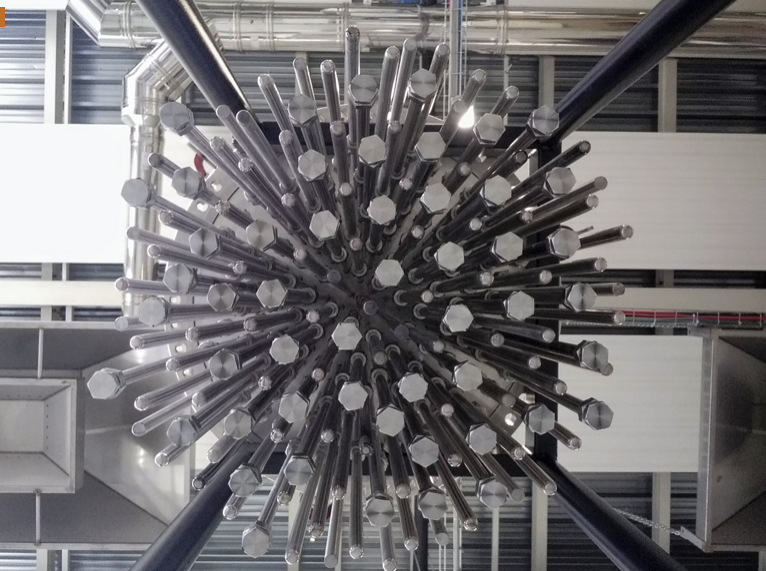Photo: Tecnalia
Iberdrola will develop a large green hydrogen project from renewable energy sources in Puertollano, according to what the city council has made public, which, in turn, mentions an article published in the economic newspaper Expansión.
The project will involve an investment of up to 150 million euros in a plant that will be one of the largest in Europe of its kind, that is, production of hydrogen from photovoltaic energy, unlike other systems, which are based on fossil fuels pollutants. The group's goal is to achieve decarbonisation and cheaper hydrogen in the future, which is now basically used in industry, but is beginning to have other applications, such as electric vehicles.
According to Iberdrola estimates, published last week by Expansión, the Puertollano plant will consist of a 100 MW experimental photovoltaic plant that will incorporate bifacial panels and string inverters, as well as a 20 MWh lithium-ion battery storage system. and 5 MW. It will also have a green hydrogen production system through electrolysis: divided into stackable modules that allow the plant to be expanded, according to the identified hydrogen demand needs. In this regard, different technologies will be tested: alkaline, proton exchange membrane, and solid oxide.
It will also have a main hydrogen storage system in pressurized tanks and an experimental storage plant for other technologies such as LOHC (organic liquid carrier hydrogen), as well as a control system that allows the optimal balance between renewable production, use of the battery and the energy dedicated to the production of green hydrogen.
**Ideal location**
"The choice of Puertollano as an enclave to launch the project is not accidental", they explain from the town hall. “It is a strategic place from which Iberdrola will not only be able to produce hydrogen, but will also be able to commercialize it for industrial use to adjacent companies for their production processes. The project will be located on the land that Iberdrola has had in Puertollano for years, and where it had already begun to build the photovoltaic. In Puertollano there is also the National Hydrogen Center. To distinguish itself from other hydrogens, Iberdrola will promote the creation of a green label for those produced with electricity before the authorities ”, they add.
Together with the project, Iberdrola will promote the creation of a 'green' label for the hydrogen produced that ensures that its carbon footprint is zero, thus helping hydrogen users to reduce their CO2 emissions.
The power company claims that decarbonising global hydrogen through its production with renewable electric energy would mean an increase in electricity demand of more than 10%, which would allow for the flood of renewable energy projects that the Government plans to incorporate with the new energy plan. .
**Other pioneering projects**
This project joins those that have been announced in recent weeks: the [green](https://www.pv-magazine.es/2019/05/08/la-mayor-planta-de-generacion-de-hidrogeno-de-la-union-europea-estara-en-espana/) hydrogen production plant in [Lloseta, a pioneer in Spain, will start operating from 2021 thanks to the Power to Green Hydrogen Mallorca project, and will allow a generation of up to 10 MW of production.](https://www.pv-magazine.es/2019/05/08/la-mayor-planta-de-generacion-de-hidrogeno-de-la-union-europea-estara-en-espana/)
[The Fundación Hidrogen Aragón coordinates a project to promote decarbonisation in Europe:](https://www.pv-magazine.es/2020/01/22/la-fundacion-hidrogeno-aragon-coordina-un-proyecto-para-impulsar-la-descarbonizacion-en-europa/) The HIGGS project, which is now being launched in Huesca, will study for 36 months the possibilities of injecting hydrogen into current natural gas networks as a way to reduce emissions of CO2 in sectors difficult to electrify.
[Enagás and Ampere will be the first to produce hydrogen with solar energy in Spain:](https://www.pv-magazine.es/2020/03/02/enagas-y-ampere-seran-los-primeros-en-producir-hidrogeno-con-energia-solar-en-espana/) both companies have signed an agreement for the joint development of several R&D projects for hydrogen production with solar and batteries.
[Tecnalia, Engie and the University of Eindhoven (TUe) create in Bizkaia H2SITE, a startup to produce green hydrogen on site](https://www.pv-magazine.es/2020/03/09/tecnalia-engie-y-la-tue-crean-en-bizkaia-una-startup-para-producir-in-situ-hidrogeno-verde/).
Green Hydrogen has serious potential to accelerate the transition to clean sources of energy. Schedule a call with us to see how we could work together:
[](https://cta-redirect.hubspot.com/cta/redirect/4287976/17866f77-d8e8-4f34-af4f-9d8fda2e6256)
This article originally appeared on [pv-magazine-spain.com,](https://www.pv-magazine.es/?utm_source=crossdomain&utm_medium=referral&utm_campaign=tabs) and has been republished with permission by pv magazine ([www.pv-magazine.com](http://www.pv-magazine.com/) and [www.pv-magazine-spain.com](https://www.pv-magazine.es/?utm_source=crossdomain&utm_medium=referral&utm_campaign=tabs)).
[Read More](https://blog.breiterplanet.com/hydrogen/iberdrola-will-build-in-puertollano-one-of-the-largest-green-hydrogen-plants-in-europe)
## [QUT to drive green hydrogen export through LNG-focused research center](https://blog.breiterplanet.com/hydrogen/qut-to-drive-green-hydrogen-export-through-lng-focused-research-center)
Apr 28, 2020 9:15:00 AM / by [Marija Maisch, pv magazine](https://blog.breiterplanet.com/hydrogen/author/marija-maisch-pv-magazine) posted in [Policy](https://blog.breiterplanet.com/hydrogen/topic/policy), [Politics](https://blog.breiterplanet.com/hydrogen/topic/politics), [Energy Storage](https://blog.breiterplanet.com/hydrogen/topic/energy-storage), [Markets](https://blog.breiterplanet.com/hydrogen/topic/markets), [Finance](https://blog.breiterplanet.com/hydrogen/topic/finance), [Decarbonize](https://blog.breiterplanet.com/hydrogen/topic/decarbonize), [Decarbonization](https://blog.breiterplanet.com/hydrogen/topic/decarbonization), [Hydrogen](https://blog.breiterplanet.com/hydrogen/topic/hydrogen), [Green Hydrogen](https://blog.breiterplanet.com/hydrogen/topic/green-hydrogen), [Australia](https://blog.breiterplanet.com/hydrogen/topic/australia), [Technology](https://blog.breiterplanet.com/hydrogen/topic/technology), [Electrolysis](https://blog.breiterplanet.com/hydrogen/topic/electrolysis), [Research](https://blog.breiterplanet.com/hydrogen/topic/research)
[0 Comments](https://blog.breiterplanet.com/hydrogen/qut-to-drive-green-hydrogen-export-through-lng-focused-research-center#comments-listing)

Hydrogen from electrolysis is often described as the missing link in the energy transition.
*Image: Roy Luck/Flickr*
As the momentum is building behind hydrogen in Australia and abroad, the Queensland University of Technology (QUT) is leading the way in research and development with a range of initiatives on the ground. After it played a key role in [Australia’s first green hydrogen shipment to Japan](https://www.pv-magazine-australia.com/2019/03/29/queensland-sends-first-green-hydrogen-shipment-to-japan/), QUT is now readying to drive the green hydrogen export industry through the Future Energy Exports Cooperative Research Centre (FEnEx CRC).
Officially established on Friday, the FEnEx CRC is a national collaboration of 28 industry, government, and research partners. As announced on Friday, the center won the backing of the Federal Government to the tune of $40 million, which builds upon a further $122 million in support from industry, state governments, and research organizations.
The CRC’s core mission is to ensure Australia’s LNG industry remains competitive, reduces its environmental footprint, and helps to grow hydrogen exports for new emerging markets. Its foundation project will be establishing the LNG Futures Facility, a 10 tonne-per-day research and teaching plant to be based at Kwinana, in Western Australia.
“FEnEx CRC will undertake cutting-edge, industry-led research, education and training to help sustain Australia’s position as a leading LNG exporter, and enable it to become the leading global exporter of clean hydrogen,” Professor Eric May, UWA’s Chevron Chair in Gas Process Engineering and FEnEx CRC Acting CEO, said. “Our established LNG sector is a key advantage in the race to grow a hydrogen export industry because of the similar workforce skills, engineering standards, shipping routes, and business relationships.”
But while Professor May has spoken about “clean” hydrogen, there has been no indication that this hydrogen will be truly clean and produced by electrolysis using solar or wind electricity. He said the CRC would support [Australia’s National Hydrogen Strategy](https://www.pv-magazine-australia.com/2019/11/23/australias-national-hydrogen-strategy-adopted-funds-for-new-projects-allocated/), which remains “technology-neutral”, with both hydrogen produced using renewable energy and the one via fossil fuels with “substantial” carbon capture and storage (CCS) in the game.
Throughout the consultation process last year, Chief Scientist Alan Finkel continued to push Australia toward hydrogen produced by solar and wind, but also [remained attached to the fossil fuel-CSS idea.](https://www.pv-magazine-australia.com/2019/09/25/finkel-persisting-with-carbon-capture-and-storage/) The stance was reflected in the Strategy itself.
**Green hydrogen push**
Nonetheless, Professor Ian Mackinnon, from QUT’s Institute for Future Environments, said FEnEx would build on the extensive work QUT had already done in the green hydrogen sphere, including [partnering with Japanese company JXTG to produce and export green hydrogen to Japan](https://www.pv-magazine-australia.com/2019/03/29/queensland-sends-first-green-hydrogen-shipment-to-japan/) and leading a [$7.5 million research project](https://www.pv-magazine-australia.com/2019/10/17/qut-at-the-forefront-of-australias-hydrogen-push/) to establish a renewable energy pilot plant producing green hydrogen at the Redlands Research Facility. This latter project is supported by four universities, Japanese and Australian corporations, the Queensland Government and the Commonwealth agency, ARENA.
“The FEnEx CRC is an excellent opportunity to translate the skills from one industry, and to build another export industry in the world of green hydrogen storage and utilization,” Professor Mackinnon said. As part of the FEnEx CRC, QUT’s Professor Mackinnon and Professor Anthony O’Mullane will be working on research projects involving the hydrogen export and value chains.
“This complements QUT’s activities in developing a renewable energy facility at Redlands to power the production of hydrogen using various electrolyser technologies,” Professor O’Mullane said. “This program will enable the next generation of scientists and engineers with the key skills for the transition to renewable power generation, storage, transport and utilisation. This CRC will accelerate efforts in the development of cheaper, more stable catalysts for rapid deployment in commercial scale electrolysers to produce green hydrogen.”
Another QUT professor, Rachel Parker will lead the Market Development Program in the FEnEx CRC, which will aim to identify the strongest global market opportunities for the development of Australia’s future energy exports. “The market development program will identify the business and social drivers and barriers to the adoption of technologies developed through the other CRC programs and will maximise the market and social benefits from the rapidly changing technological and industrial context of energy,” she said.
[Read More](https://blog.breiterplanet.com/hydrogen/qut-to-drive-green-hydrogen-export-through-lng-focused-research-center)
## [Stanwell’s utility-scale green hydrogen plans get financial shot in the arm](https://blog.breiterplanet.com/hydrogen/stanwells-utility-scale-green-hydrogen-plans-get-financial-shot-in-the-arm)
Apr 14, 2020 9:15:00 AM / by [Marija Maisch, pv magazine](https://blog.breiterplanet.com/hydrogen/author/marija-maisch-pv-magazine) posted in [Policy](https://blog.breiterplanet.com/hydrogen/topic/policy), [Markets](https://blog.breiterplanet.com/hydrogen/topic/markets), [Decarbonize](https://blog.breiterplanet.com/hydrogen/topic/decarbonize), [Power Generation](https://blog.breiterplanet.com/hydrogen/topic/power-generation), [Decarbonization](https://blog.breiterplanet.com/hydrogen/topic/decarbonization), [Hydrogen](https://blog.breiterplanet.com/hydrogen/topic/hydrogen), [Green Hydrogen](https://blog.breiterplanet.com/hydrogen/topic/green-hydrogen), [Australia](https://blog.breiterplanet.com/hydrogen/topic/australia), [Technology](https://blog.breiterplanet.com/hydrogen/topic/technology), [Electrification](https://blog.breiterplanet.com/hydrogen/topic/electrification), [Electrolysis](https://blog.breiterplanet.com/hydrogen/topic/electrolysis), [Research & Development](https://blog.breiterplanet.com/hydrogen/topic/research-development), [Hydrogen Production](https://blog.breiterplanet.com/hydrogen/topic/hydrogen-production), [Oceania](https://blog.breiterplanet.com/hydrogen/topic/oceania)
[0 Comments](https://blog.breiterplanet.com/hydrogen/stanwells-utility-scale-green-hydrogen-plans-get-financial-shot-in-the-arm#comments-listing)

*Image: ARENA*
The Australian Renewable Energy Agency (ARENA) has announced a $1.25 million (US$807,495) grant to Queensland government-owned electricity generator Stanwell Corp. to assist a feasibility study for a renewable hydrogen demonstration plant, which will be located next to the company’s existing power station near Rockhampton. Stanwell’s $5 million study, which started in July 2019, is investigating the technical and economic feasibility of hydrogen electrolysis projects above 10 MW in size. If built, it will be the largest green hydrogen electrolysis plant in Australia.
To offset 100% of the emissions associated with running the electrolyzer, Stanwell will procure energy and green certificates from renewable energy projects in the region. This will be yet another innovative deal for the publicly owned generator, following last year’s network support agreement between Stanwell’s Kareeya Hydro Power Station and Pacific Hydro’s 100 MW Haughton Solar Farm. Under that deal, the services provided by Kareeya will strengthen the regional grid, which is subject to lower system-strength levels, to operate the solar project in line with generator performance standards.
A key outcome of the study will be to define the most valuable end use for renewable hydrogen. The utility-scale electrolyzer will enjoy the advantages of the existing power station to use pre-existing land approvals, network connections, and access to demineralized water, which is required for hydrogen production.
The project could demonstrate the role that renewable hydrogen production can play in an electricity system. In particular, the hydrogen electrolyzer could be used as a complementary energy market load that can ramp up in times of excess energy supply, such as peak solar output during the day. It could also aid system security through participation in Frequency Control Ancillary Services (FCAS) markets or future markets such as Fast Frequency Response (FFR).
“Through Stanwell’s feasibility study we’re showing a new option for producing and using renewable hydrogen. This will create opportunities across the domestic economy and help to position Australia to become a major renewable energy exporter,” ARENA CEO Darren Miller said. The ongoing study is expected to be completed later this year.
The hydrogen industry in its infancy in Australia, but the study will determine the optimal conditions for electrolyzers operating at high capacities. “The construction and operation of a utility-scale electrolyzer is important to demonstrate the costs associated with producing renewable hydrogen at scale,” Miller said. “If feasible, this could help underpin future commercial scale deployments leveraging existing network infrastructure at other power stations, and play a role in driving down the cost of domestic hydrogen production.”
ARENA has committed approximately $50 million towards hydrogen initiatives so far, including more than $22 million to R&D projects, and almost $28 million to demonstration, feasibility and pilot projects. In some of its earlier Queensland initiatives, ARENA announced it was providing $2.9 million in funding to two studies looking at the potential to use solar and wind-powered hydrogen produced via electrolysis to increase ammonia production at facilities which currently rely on gas as feedstock.
Schedule a call with us to see how Green Hydrogen could work for your facility:
[](https://cta-redirect.hubspot.com/cta/redirect/4287976/17866f77-d8e8-4f34-af4f-9d8fda2e6256)
This article originally appeared on [pv-magazine-usa.com](http://pv-magazine-usa.com/), and has been republished with permission by pv magazine ([www.pv-magazine.com](http://www.pv-magazine.com/) and [www.pv-magazine-usa.com](http://www.pv-magazine-usa.com/)).
[Read More](https://blog.breiterplanet.com/hydrogen/stanwells-utility-scale-green-hydrogen-plans-get-financial-shot-in-the-arm)
## [Solar-powered hydrogen production in Japan](https://blog.breiterplanet.com/hydrogen/solar-powered-hydrogen-production-in-japan)
Mar 17, 2020 9:15:00 AM / by [Emiliano Bellini, pv magazine](https://blog.breiterplanet.com/hydrogen/author/emiliano-bellini-pv-magazine) posted in [Energy Storage](https://blog.breiterplanet.com/hydrogen/topic/energy-storage), [Markets](https://blog.breiterplanet.com/hydrogen/topic/markets), [Decarbonize](https://blog.breiterplanet.com/hydrogen/topic/decarbonize), [Decarbonization](https://blog.breiterplanet.com/hydrogen/topic/decarbonization), [Asia](https://blog.breiterplanet.com/hydrogen/topic/asia), [Hydrogen](https://blog.breiterplanet.com/hydrogen/topic/hydrogen), [Green Hydrogen](https://blog.breiterplanet.com/hydrogen/topic/green-hydrogen), [Grids](https://blog.breiterplanet.com/hydrogen/topic/grids), [Integration](https://blog.breiterplanet.com/hydrogen/topic/integration), [Industrial PV](https://blog.breiterplanet.com/hydrogen/topic/industrial-pv), [Commercial PV](https://blog.breiterplanet.com/hydrogen/topic/commercial-pv), [Japan](https://blog.breiterplanet.com/hydrogen/topic/japan), [Utility Scale Markets](https://blog.breiterplanet.com/hydrogen/topic/utility-scale-markets)
[0 Comments](https://blog.breiterplanet.com/hydrogen/solar-powered-hydrogen-production-in-japan#comments-listing)

The solar-powered hydrogen facility owned by Toshiba in Namie, Fukushima prefecture, Japan.
*Image: Toshiba*
Japanese conglomerate [Toshiba Corporation](https://www.pv-magazine.com/2018/11/08/toshiba-pulls-plug-on-uk-nuclear-plans-leaving-path-for-renewables-open/) has announced its Fukushima Hydrogen Energy Research Field (FH2R) project, on which construction began in July 2018, is operational.
The solar-powered 10 MW hydrogen plant in Namie town, [Fukushima prefecture](https://www.pv-magazine.com/2018/03/10/sunshine-for-fukushima/), is said to be able to produce 1,200 normal cubic meters (Nm3) of hydrogen per hour.
The intermittent nature of solar generation prompted Toshiba to design the facility to be able to adjust to supply and demand in the grid, the company said.
“Hydrogen produced at FH2R will also be used to power stationary hydrogen fuel cell systems and to provide for … mobility devices, fuel-cell cars and buses and more,” Toshiba added. “The most important challenge in the current stage of testing is to use the hydrogen energy management system to achieve the optimal combination of production and storage of hydrogen and power grid supply-demand balancing adjustments without the use of storage batteries.”
**Solar power**
The plant is being powered by 20 MW of solar generation capacity as well as grid power. The hydrogen generated is being transported in trailers and hydrogen bundles to users elsewhere in the prefecture as well as the Tokyo metropolitan area and other regions.
In early January, Toshiba commissioned the H2One Station Unit, an energy storage system producing hydrogen at the Toyama City Environment Center in Toyama prefecture. According to the company, that kind of installation can be deployed easily and operated by customers such as factories, harbors, airports and bus depots. A similar facility was deployed at the end of December in Tsuruga City, in the Hokuriku region.
[Toshiba’s energy system and solutions](https://www.pv-magazine.com/2016/04/04/toshiba-to-install-pv-hydrogen-system-at-train-station-in-japan_100024000/) business began a [demonstration of an holistic hydrogen supply chain for electricity generation in May 2018](https://www.pv-magazine.com/2018/05/30/toshiba-to-start-power-to-gas-supply-chain-demonstration-in-japan/).
The multinational had announced in February 2016 it would [place more emphasis on its energy and storage businesses](https://www.pv-magazine.com/2016/02/04/toshiba-reorganizing-to-focus-on-energy-storage-amid-major-losses_100023059/) following an accounting scandal which had prompted a restructure and losses of around $6 billion in 2015.
*This article was amended on 10/03/20 to reflect the claimed hourly hydrogen production capacity is measured in normal cubic meters rather than newton meters, as previously reported*.
This article originally appeared on [pv-magazine-usa.com](http://pv-magazine-usa.com/), and has been republished with permission by pv magazine ([www.pv-magazine.com](http://www.pv-magazine.com/) and [www.pv-magazine-usa.com](http://www.pv-magazine-usa.com/)).
[Read More](https://blog.breiterplanet.com/hydrogen/solar-powered-hydrogen-production-in-japan)
## [Gladstone to run on gas-green hydrogen blend as gigawatt-scale plans take shape](https://blog.breiterplanet.com/hydrogen/gladstone-to-run-on-gas-green-hydrogen-blend-as-gigawatt-scale-plans-take-shape)
Mar 5, 2020 9:30:00 AM / by [Marija Maisch, pv magazine](https://blog.breiterplanet.com/hydrogen/author/marija-maisch-pv-magazine) posted in [Markets](https://blog.breiterplanet.com/hydrogen/topic/markets), [Finance](https://blog.breiterplanet.com/hydrogen/topic/finance), [Decarbonize](https://blog.breiterplanet.com/hydrogen/topic/decarbonize), [Decarbonization](https://blog.breiterplanet.com/hydrogen/topic/decarbonization), [Hydrogen](https://blog.breiterplanet.com/hydrogen/topic/hydrogen), [Green Hydrogen](https://blog.breiterplanet.com/hydrogen/topic/green-hydrogen), [Australia](https://blog.breiterplanet.com/hydrogen/topic/australia), [Electrification](https://blog.breiterplanet.com/hydrogen/topic/electrification), [Queensland](https://blog.breiterplanet.com/hydrogen/topic/queensland), [Electrolysis](https://blog.breiterplanet.com/hydrogen/topic/electrolysis), [Employment](https://blog.breiterplanet.com/hydrogen/topic/employment)
[0 Comments](https://blog.breiterplanet.com/hydrogen/gladstone-to-run-on-gas-green-hydrogen-blend-as-gigawatt-scale-plans-take-shape#comments-listing)

Hydrogen from electrolysis is often described as the missing link in the energy transition.
*Image: ARENA*
Gladstone set to become the nation’s green hydrogen hotspot with two new projects seeking to tap the opportunities in the domestic supply of zero-emissions gas and in the emerging export market. Located in central Queensland, Gladstone is set to become the first entire city in the nation to be on a blend of natural gas and hydrogen.
An Australian first $4.2 million gas injection facility will be built in Gladstone to deliver renewable hydrogen into the city’s gas network, thanks to the first grant from the Queensland Government’s $15 million [Hydrogen Industry Development Fund](https://www.pv-magazine-australia.com/2019/07/09/queensland-government-opens-funding-for-new-hydrogen-projects/). “Using green hydrogen, Australian Gas Networks (AGN) will trial the blended hydrogen gas with a view to converting Gladstone’s network to hydrogen in the future,” Queensland Premier Annastacia Palaszczuk said.
AGN, part of the Australian Gas Infrastructure Group (AGIG), has been offered more than $1.7 million through the fund to build a blending facility to deliver 10% renewable hydrogen into the gas network. Under [its $19 million hydrogen strategy](https://www.pv-magazine-australia.com/2019/06/01/queensland-launches-19-million-hydrogen-strategy/), Queensland is looking to assist companies with the purchase of capital equipment as well as industry players looking to carry out feasibility studies.
“This project will be the first in Australia to blend renewable hydrogen into a gas network with residential, commercial and industrial customers,” Minister for State Development Cameron Dick said speaking from the Gladstone Hydrogen Forum on Thursday.
Elsewhere in Australia, Canadian gas giant ATCO started blending renewable hydrogen into the on-site natural gas network at its Clean Energy Innovation Hub in Jandakot, WA. The blend will be used throughout the Jandakot depot as the first step in exploring the potential of hydrogen for home use in gas appliances.
[In another initiative](https://www.pv-magazine-australia.com/2019/07/31/jemena-gearing-up-to-make-nsw-gas-network-greener-in-five-year-trial/) for greening the gas network, energy infrastructure company Jemena is looking to generate hydrogen from renewables and inject it into the existing gas network so that homes and businesses in Sydney could begin using the fuel within five years. The $15 million [Western Sydney Green Gas Project](https://www.pv-magazine-australia.com/2018/10/22/green-hydrogen-to-power-sydney-homes-and-businesses/) aims to demonstrate the co-mingling, storage and distribution of hydrogen and natural gas in the existing network which, as Jemena puts it, has the capacity to store the equivalent of 8 million Powerwall batteries.
“This project supports Gladstone’s vision to be a key hub for Queensland’s domestic and hydrogen export industry, just as it is for natural gas today,” AGN’s CEO Ben Wilson said. AGN had formed a partnership with Central Queensland University (CQU) providing access to the blending facility for CQU staff and students to build skills in hydrogen technologies.
**Gigawatt plans**
Along with the AGN project, Gladstone has also been selected as the location for the Hydrogen Utility’s (H2U) latest project, a proposed $1.61 billion industrial complex for the large-scale production of green hydrogen and ammonia. The H2-HubTM Gladstone facility will be built in stages to integrate up to 3 GW in electrolysis plant, and up to 5,000 tonnes per day ammonia production capacity.
“The integration of mature technologies – such as electrolysis and ammonia synthesis – at industrial scale, powered by 100 per cent renewable power supply, meets the emerging demand for decarbonised products in the energy, chemicals and mobility markets of North Asia,” Attilio Pigneri CEO and Founder of H2U said. He sees Queensland as well-positioned to capitalize on the opportunities from this new industry, in part due to its strong existing trading relationships with Japan.
According to Attilio, Gladstone was an obvious choice for locating industrial-scale green hydrogen and ammonia facilities due to its existing skill base, industrial port eco-system, and strategic location in the Queensland grid. Through the government-run land use planning and property development agency, Economic Development Queensland (EDQ), H2U has purchased a 171-hectare site at Yarwun in the Gladstone State Development Area, which is in close proximity to the export precinct at Fisherman’s Landing.
“The progressive and well-structured planning framework applicable to State Development Areas such as Yarwun, was also a key factor in our selection of the project site,” Pigneri said. “With the land in Gladstone secured under contract the project will now move into master planning and detailed feasibility, targeting approvals by 2023 and first operation in 2025.”
The project could potentially translate into a major bonanza for the city, creating over 100 operational jobs and driving new exports for green hydrogen and ammonia. Ultimately, it could turn Gladstone into the hydrogen export powerhouse on the back of Queensland’s solar, wind and biomass resources, existing gas pipeline infrastructure and developed export infrastructure.
A big step was made last year when Queensland celebrated Australia’s [first-ever delivery of green hydrogen to Japan.](https://www.pv-magazine-australia.com/2019/03/29/queensland-sends-first-green-hydrogen-shipment-to-japan/) The fuel was exported by JXTG, Japan’s largest petroleum conglomerate, with hydrogen produced at QUT’s solar cell facility at the Queensland government’s Redlands Research Facility.
Previously, the Queensland government committed $750,000 for a feasibility study into producing hydrogen using solar energy from central Queensland and exporting it to Japan via Gladstone. In a separate initiative, the Australian Renewable Energy Agency (ARENA) announced it was providing $2.9 million in funding to [two studies](https://www.pv-magazine-australia.com/2019/09/30/two-major-ammonia-plants-powered-by-green-hydrogen-planned-for-queensland/) in Queensland looking at the potential to use solar and wind-powered hydrogen produced via electrolysis to increase ammonia production at facilities which currently rely on gas as feedstock.
This article originally appeared on [pv-magazine-australia.com](https://www.pv-magazine-australia.com/), and has been republished with permission by pv magazine ([www.pv-magazine.com](http://www.pv-magazine.com/) and [www.pv-magazine-australia.com](https://www.pv-magazine-australia.com/) )
[Read More](https://blog.breiterplanet.com/hydrogen/gladstone-to-run-on-gas-green-hydrogen-blend-as-gigawatt-scale-plans-take-shape)
## [Daintree solar to hydrogen microgrid closing on reality](https://blog.breiterplanet.com/hydrogen/daintree-solar-to-hydrogen-microgrid-closing-on-reality)
Feb 27, 2020 9:45:00 AM / by [Blake Matich, pv magazine](https://blog.breiterplanet.com/hydrogen/author/blake-matich-pv-magazine) posted in [Policy](https://blog.breiterplanet.com/hydrogen/topic/policy), [Politics](https://blog.breiterplanet.com/hydrogen/topic/politics), [Energy Storage](https://blog.breiterplanet.com/hydrogen/topic/energy-storage), [Markets](https://blog.breiterplanet.com/hydrogen/topic/markets), [Microgrids](https://blog.breiterplanet.com/hydrogen/topic/microgrids), [Greenhouse Gas Emissions](https://blog.breiterplanet.com/hydrogen/topic/greenhouse-gas-emissions), [Decarbonization](https://blog.breiterplanet.com/hydrogen/topic/decarbonization), [Infrastructure](https://blog.breiterplanet.com/hydrogen/topic/infrastructure), [Climate Change](https://blog.breiterplanet.com/hydrogen/topic/climate-change), [Hydrogen](https://blog.breiterplanet.com/hydrogen/topic/hydrogen), [Green Hydrogen](https://blog.breiterplanet.com/hydrogen/topic/green-hydrogen), [Highlights](https://blog.breiterplanet.com/hydrogen/topic/highlights), [Australia](https://blog.breiterplanet.com/hydrogen/topic/australia), [Sustainability](https://blog.breiterplanet.com/hydrogen/topic/sustainability), [Queensland](https://blog.breiterplanet.com/hydrogen/topic/queensland)
[0 Comments](https://blog.breiterplanet.com/hydrogen/daintree-solar-to-hydrogen-microgrid-closing-on-reality#comments-listing)

Image: Warren Entsch MP
In May 2019, [a federal government grant of $990,150 backed Daintree Renewable Energy Pty Ltd](https://www.pv-magazine-australia.com/2019/05/07/australias-first-solar-to-hydrogen-based-microgrid-gets-nearly-1-million-in-federal-funding/) toward a feasibility study that would take the fully renewable solar baseload-power microgrid to ‘shovel ready’ status within 12 months. If what Federal MP Warren Entsch has said is true, construction on the project should be underway in a matter of months.
“Work commenced in early December 2019,” said Entsch, “and will be finalised in July 2020…The final report will include a complete series of engineering and technical design packages including a detailed energy load profile study, microgrid management design, solar generation and storage analysis and design, electrical and civil work designs and microgrid economic analysis.”
Because the Daintree is a World Heritage Protected Rainforest there are heavy restrictions on planning and development. Because of this, Entsch has also quashed the rumour that further development in the region was on the cards. The microgrid project is it, and, Entsch assures us, it “is being designed to align with the strict planning regime and accommodate energy requirements for existing population and businesses.”
The proposed microgrid would reduce the Daintree area’s reliance on diesel dramatically. Currently, the region relies on four million litres of diesel fuel per year to generate power.
Volt Advisory Group project manager Richard Schoenemann said work on the project was “actually” slightly ahead of schedule. “It will remove the need to burn dirty and inefficient diesel in the Daintree,” said Schoenemann, “allowing customers to have access to a cleaner, more affordable, more reliable source of energy.”
“But more importantly,” Schonemann stressed, “once the concept is demonstrated and up-and-running it will have enormous potential to improve the power supply and lives of people living in remote communities including throughout the Torres Strait.”
Like many remote island communities, Torres Strait Islanders would greatly benefit from the sustainable renewable energy supplied by solar based microgrids.
The federal government grant forms part of its $50.4 million Regional and Remote Communities Reliability Fund, part of the Morrison Government’s $2 billion Climate Solutions Fund. You may remember the Climate Solutions Fund as the pitiful federal effort toward the nation’s Paris targets that was supposed to be a [10-year investment plan](https://www.pv-magazine-australia.com/2019/02/25/morrison-to-announce-2-billion-over-10-years-for-climate-fund/) but has already been [pushed to 15 years](https://www.pv-magazine-australia.com/2019/04/03/budget-2019-revels-cuts-to-climate-fund/), cutting the investment by 30%.
Under the scheme, the Coalition government plans to support exploratory work for up to 50 off-grid and fringe-of-grid feasibility studies, and take proposals like the Daintree region project to the investment stage.
[Read More](https://blog.breiterplanet.com/hydrogen/daintree-solar-to-hydrogen-microgrid-closing-on-reality)
## [Green hydrogen costs projected to decrease by up to 60% by 2030](https://blog.breiterplanet.com/hydrogen/green-hydrogen-costs-projected-to-decrease-by-up-to-60-by-2030)
Feb 4, 2020 9:00:00 AM / by [Marija Maisch, pv magazine](https://blog.breiterplanet.com/hydrogen/author/marija-maisch-pv-magazine) posted in [Energy Storage](https://blog.breiterplanet.com/hydrogen/topic/energy-storage), [Markets](https://blog.breiterplanet.com/hydrogen/topic/markets), [Decarbonize](https://blog.breiterplanet.com/hydrogen/topic/decarbonize), [Decarbonization](https://blog.breiterplanet.com/hydrogen/topic/decarbonization), [Climate Change](https://blog.breiterplanet.com/hydrogen/topic/climate-change), [Hydrogen](https://blog.breiterplanet.com/hydrogen/topic/hydrogen), [Green Hydrogen](https://blog.breiterplanet.com/hydrogen/topic/green-hydrogen), [World](https://blog.breiterplanet.com/hydrogen/topic/world), [utility scale storage](https://blog.breiterplanet.com/hydrogen/topic/utility-scale-storage), [Australia](https://blog.breiterplanet.com/hydrogen/topic/australia), [Technology](https://blog.breiterplanet.com/hydrogen/topic/technology)
[0 Comments](https://blog.breiterplanet.com/hydrogen/green-hydrogen-costs-projected-to-decrease-by-up-to-60-by-2030#comments-listing)

Green hydrogen can be produced through electrolysis from any low-cost energy source.
*Image: Siemens*
[Hydrogen](https://www.pv-magazine.com/2019/12/13/hydrogen-production-as-an-antidote-to-grid-constraints-in-northern-netherlands/) cost competitiveness is closer than previously thought and scaling up existing hydrogen technologies will deliver competitive low-carbon solutions across a wide range of applications by 2030, finds a new report published by Hydrogen Council. Yet, to reach this scale, there is a need for investment, policy alignment, and demand creation.
As scale-up of [hydrogen](https://www.pv-magazine.com/2019/12/20/denmark-bets-on-green-hydrogen/) production, distribution, as well as of equipment and component manufacturing continues, cost is projected to decrease by up to 50% by 2030 for a wide range of applications, making hydrogen competitive with other low-carbon alternatives and, in some cases, even conventional option, finds the report prepared by global consultancy McKinsey. To deliver on this opportunity, supporting policies will be required in key geographies, including Australia, together with investment support of around US$70 billion.

“Based on real cost data from the industry, the analysis shows that a number of [hydrogen](https://www.pv-magazine.com/2019/11/21/a-new-catalyst-to-split-hydrogen-from-seawater/) solutions can become competitive until 2030 already.” says Bernd Heid, Senior Partner at McKinsey & Company. “Out of 35 use cases analysed, at-scale hydrogen can be the lowest cost low-carbon solution in 22 use cases – such as in the steel industry and heating for existing buildings. And it can beat fossil-based solutions at scale in 9 use cases – for example in heavy-duty transport and trains.”
**2030 promise**
Strong fall in the cost of producing low carbon and [renewable hydrogen](https://www.pv-magazine.com/2019/11/18/engie-and-air-liquide-join-forces-to-develop-green-hydrogen/) is one of the main drivers of this cost trajectory and hydrogen produced via electrolysis is identified as one of the areas where investment until 2030 would make the biggest difference. According to the report, achieving competitive renewable hydrogen from electrolysis will require the deployment of aggregated 70 GW of electrolyzer capacity, with an implied cumulative funding gap with grey production of $US20 billion.
In an earlier analysis, [Wood Mackenzie also identified 2030 as the year when green hydrogen](https://www.pv-magazine.com/2019/11/15/green-hydrogen-to-reach-cost-parity-by-2030/), produced primarily by solar electrolysis, would reach cost parity. According to the consultancy, renewables hydrogen could reach parity in Australia, Germany, and Japan by 2030, based on US$30/MWh renewable electricity and 50% utilization hours for electrolyzers.
In production, the cost of low-carbon and/or renewable hydrogen production will fall drastically by up to 60% over the coming decade, the Hydrogen Council report states. This can be attributed to the falling costs of renewable electricity generation, scaling up of electrolyzer manufacturing, and the development of lower-cost carbon storage facilities. Although it identified the same drivers behind falling costs, the International Energy Agency (IEA) was more conservative in its forecast. Its earlier analysis showed that the cost of producing hydrogen from renewable electricity could fall around 30% by 2030.
“2020 marks the beginning of a new era for energy: as the potential for hydrogen to become part of our global energy system becomes a reality, we can expect fewer emissions and improved security and flexibility. This announces the decade of hydrogen,” said Benoît Potier, Chairman and CEO of Air Liquide and Co-chair of the Hydrogen Council. “A clean energy future with hydrogen is closer than we think, because the industry has been working hard on addressing key technology challenges.”
While often touted as the missing link in the energy transition, hydrogen has seen false dawns before. Declaring 2019 a critical year for hydrogen, the IEA said hydrogen was enjoying unprecedented momentum around the world. This was corroborated by the emergence of hydrogen roadmaps and strategies from around the world, which all suggested a large scale and rapid deployment of hydrogen technologies is expected from around 2030 onwards.
In Australia, state and federal energy ministers have given a tick of approval to the National Hydrogen Strategy prepared by chief scientist Alan Finkel and voiced support for a $370 million fund for green hydrogen projects. However, against high expectations of the country’s hydrogen export potential, The Australia Institute’s analysis has suggested that Australia has overhyped the potential demand for hydrogen exports by a factor of up to 11.
[Read More](https://blog.breiterplanet.com/hydrogen/green-hydrogen-costs-projected-to-decrease-by-up-to-60-by-2030)
## [Australia’s National Hydrogen Strategy adopted, funds for new projects allocated](https://blog.breiterplanet.com/hydrogen/australias-national-hydrogen-strategy-adopted-funds-for-new-projects-allocated)
Jan 28, 2020 8:35:00 AM / by [Marija Maisch, pv magazine](https://blog.breiterplanet.com/hydrogen/author/marija-maisch-pv-magazine) posted in [Policy](https://blog.breiterplanet.com/hydrogen/topic/policy), [Markets](https://blog.breiterplanet.com/hydrogen/topic/markets), [Utility-Scale PV](https://blog.breiterplanet.com/hydrogen/topic/utility-scale-pv), [Installations](https://blog.breiterplanet.com/hydrogen/topic/installations), [Decarbonize](https://blog.breiterplanet.com/hydrogen/topic/decarbonize), [Fossil Fuels](https://blog.breiterplanet.com/hydrogen/topic/fossil-fuels), [Coal](https://blog.breiterplanet.com/hydrogen/topic/coal), [Decarbonization](https://blog.breiterplanet.com/hydrogen/topic/decarbonization), [Hydrogen](https://blog.breiterplanet.com/hydrogen/topic/hydrogen), [Green Hydrogen](https://blog.breiterplanet.com/hydrogen/topic/green-hydrogen), [Highlights](https://blog.breiterplanet.com/hydrogen/topic/highlights), [World](https://blog.breiterplanet.com/hydrogen/topic/world), [utility scale storage](https://blog.breiterplanet.com/hydrogen/topic/utility-scale-storage), [Australia](https://blog.breiterplanet.com/hydrogen/topic/australia), [Grids](https://blog.breiterplanet.com/hydrogen/topic/grids), [Integration](https://blog.breiterplanet.com/hydrogen/topic/integration), [Technology](https://blog.breiterplanet.com/hydrogen/topic/technology)
[0 Comments](https://blog.breiterplanet.com/hydrogen/australias-national-hydrogen-strategy-adopted-funds-for-new-projects-allocated#comments-listing)

At the Friday meeting in Perth, the COAG Energy Council agreed to the National Hydrogen Strategy, which is expected to pave the way for a hydrogen economy that would enhance Australia’s energy security, create jobs and build an export industry valued in billions. The federal government used the meeting to announce $370 million would be directed to a new fund aimed at developing Australia’s hydrogen industry.
The money to bankroll green hydrogen projects will come from existing allocations to the Clean Energy Finance Corporation (CEFC) and Australian Renewable Energy Agency (ARENA), with the former tipping in $300 million and the latter $70 million. According to Energy Minister Angus Taylor, the funding will help Australia to realise its potential as a leading hydrogen supplier to key export markets, particularly in Asia.
“The national hydrogen strategy maps out the steps we can take to develop a sustainable and commercial hydrogen industry,” he said. “The government is backing that in through project investment to promote our outstanding potential as a hydrogen supplier to the world.”
**Question of origin**
Despite positive aspects, the National Hydrogen Strategy remains “technology-neutral”, with both hydrogen produced using renewable energy and the one via fossil fuels with “substantial” carbon capture and storage (CCS) in the game. Throughout the consultation process, Australia’s Chief Scientist Alan Finkel continued to push Australia toward hydrogen produced by solar and wind, but also [remained attached to the fossil fuel-CSS idea.](https://www.pv-magazine-australia.com/2019/09/25/finkel-persisting-with-carbon-capture-and-storage/) The stance was reflected in the Strategy itself.
Notwithstanding the efforts by ACT Energy Minister Shane Rattenbury on Friday to change the strategy so it only supported green hydrogen, federal resources minister Matt Canavan said after the meeting the government would be encouraging all forms of hydrogen creation, including production using brown coal.
“We have a really challenging task to bring down the costs of supplying hydrogen to the world,” he said. “Getting all of those costs down means trying different things at the moment and it’s not the time to foreclose different ways of producing hydrogen which would limit our ability to reduce those costs in the supply chain.”
However, the good news is that the Strategy also envisaged the development of a hydrogen certification scheme that will show the emissions intensity of hydrogen produced in Australia. With such transparency, prospective importers will be aware of the environmental impacts of the hydrogen they use. And Australia expects to have many trading partners, particularly in Asia, including China, South Korea, Japan and Singapore, which are already looking to develop hydrogen economies.
As established in previous studies, capitalising on the growing demand for hydrogen could result in an export industry worth [$1.7 billion by 2030](https://www.pv-magazine-australia.com/2018/08/18/australia-has-big-hydrogen-export-opportunity/), and could provide 2,800 jobs, most likely regional ones. On top of this, two international reports have confirmed Australia’s potential as a future major hydrogen supplier. The World Energy Council identified Australia as a ‘giant with potential to become a world key player’, while the [International Energy Agency projected](https://www.pv-magazine-australia.com/2018/11/13/iea-world-energy-outlook-highlights-viability-of-australian-green-hydrogen/) that Australia could easily produce 100 million tonnes of oil equivalent of hydrogen, which could replace 3% of global gas consumption today.
**Overhigh expectations?**
However, a report by The Australia Institute (TAI) released in the run-up to the COAG meeting found the projected demand for hydrogen had been overstated. The think-tank argued the hydrogen export projections from consulting firm ACIL Allen, which the government is referring to, were 11 times higher than Japan’s official target, noting that even the low demand projection is two and half times the official target. The projections for South Korea are similarly high by comparison with government plans.
“Prematurely establishing a hydrogen export industry based on highly inflated demand figures may lock out the cleanest form of hydrogen, using renewable energy and electrolysis, because the technology isn’t cost competitive at this stage,” said Richie Merzian, Climate & Energy Program Director at TAI.“If hydrogen development is rushed in Australia it could see fossil fuels locked in as a global energy source for decades to come. The emissions will make it impossible to comply with Australia’s obligations under the Paris Agreement.”
According to a recent analysis from Wood Mackenzie, green hydrogen, produced primarily by solar electrolysis, will reach[ cost parity in Australia by 2030](https://www.pv-magazine-australia.com/2019/11/15/green-hydrogen-to-reach-cost-parity-by-2030/) based on US$30/MWh renewable electricity and 50% utilisation hours for electrolysers. But, the Hydrogen Strategy sets a vision for Australia to already become a major global player by that point. Meanwhile, CCS continues to be a costly option in Australia and across the world and often just an excuse to avoid taxing carbon and pull support from renewable energy technologies.
“A decade ago the fossil fuel industry promoted clean coal using CCS and now it is promoting hydrogen using the same unsuccessful technology. CCS projects have repeatedly failed to live up to promises, both domestically and globally, and missed their targets by a very large margin time and time again,” Merzanin said. “The only way to make hydrogen truly sustainable is to produce it using water and powered by renewable energy sources. Australia has time to establish and lead a global renewable hydrogen industry and should focus research and development efforts in that area exclusively.”
This article originally appeared on pv-magazine-australia.com and has been republished with permission by pv magazine (www.pv-magazine.com and www.pv-magazine-australia.com
[Read More](https://blog.breiterplanet.com/hydrogen/australias-national-hydrogen-strategy-adopted-funds-for-new-projects-allocated)
## [Tasmania wants to lead the way with green hydrogen](https://blog.breiterplanet.com/hydrogen/tasmania-wants-to-lead-the-way-with-green-hydrogen)
Dec 4, 2019 9:00:00 AM / by [Blake Matich](https://blog.breiterplanet.com/hydrogen/author/blake-matich) posted in [Energy Storage](https://blog.breiterplanet.com/hydrogen/topic/energy-storage), [Distributed Storage](https://blog.breiterplanet.com/hydrogen/topic/distributed-storage), [Decarbonization](https://blog.breiterplanet.com/hydrogen/topic/decarbonization), [Infrastructure](https://blog.breiterplanet.com/hydrogen/topic/infrastructure), [DERs](https://blog.breiterplanet.com/hydrogen/topic/ders), [Hydrogen](https://blog.breiterplanet.com/hydrogen/topic/hydrogen), [Energy Transition](https://blog.breiterplanet.com/hydrogen/topic/energy-transition), [Green Hydrogen](https://blog.breiterplanet.com/hydrogen/topic/green-hydrogen), [Energy Generation](https://blog.breiterplanet.com/hydrogen/topic/energy-generation), [Tasmania](https://blog.breiterplanet.com/hydrogen/topic/tasmania)
[0 Comments](https://blog.breiterplanet.com/hydrogen/tasmania-wants-to-lead-the-way-with-green-hydrogen#comments-listing)

There must be something in the water in Tasmania at the moment, and I’m not talking about James Boags, because the island state has once again demonstrated its grand ambitions in the renewable energy transition.
Last month, Hydro Tasmania laid out its audacious plan to become the [Battery of the Nation](https://www.pv-magazine-australia.com/2019/11/01/tasmania-firms-its-ambitions-of-becoming-battery-of-the-nation/) in a white paper suggesting the mainland’s pipeline of solar and wind (especially Victoria) could be freed-up by developing, via an additional interconnection across the Bass Trait, Tasmania’s great potential for pumped hydro storage.
This month, Hydro Tasmania is speaking up the state’s potential as a leader in the nation’s production of green hydrogen from renewable sources like solar electrolysis. The analysis, contained in the white paper “Tasmania’s ‘green hydrogen’ opportunity – what makes Tasmania a unique, green hydrogen zone?” argues that Tasmania has competitive advantages over other states to become Australia’s green hydrogen zone.
Hydro Tasmania’s CEO, Steve Davy, said a large-scale, cost-competitive green hydrogen production industry could be developed in the state over the coming decade.
“Our analysis indicates that green hydrogen can be produced in Tasmania for approximately 10-15% less than other Australian power grids needing to offset emissions and 20-30% less than from dedicated off-grid renewables, due to the high plant utilisation that can be supported by Tasmania’s hydropower,” said Davy.
Davy also believes it’s two great ambitions are interlinked. The Battery of the Nation project, which would require additional interconnection to the mainland, could also be utilised for the transport of green hydrogen from a state with a high level of energy security, stability and self-sufficiency in renewable energy by 2022.
Tasmania’s impressive renewable record is another reason why it posits itself as a leader in the integration of green hydrogen production with renewable energy systems. Tasmania already has the excess solar and wind generation to produce hydrogen by electrolysis. “This could make use of existing facilities,” argues Davy, “including the Kind Island and Flinders Island renewable energy integration hubs.”
“As countries like Japan and South Korea look to green hydrogen as a way to meet emissions reduction targets, hydrogen production has the potential to further support large-scale investment in new renewables, as well as direct employment,” continued Davy.
Hydro Tasmania might be getting ahead of itself in presuming green hydrogen trade agreements with countries like Japan and South Korea, the transportation of green hydrogen by ship reduces its efficiency by a significant margin. However, nothing is stopping green hydrogen’s transportation via pipelines across the relatively short distance of the Bass Strait.
It is clear that Tasmania has the bite to back up its bark and should be considered as part of the desperately needed National Hydrogen Plan.
This article originally appeared on [pv-magazine-usa.com](http://pv-magazine-usa.com/), and has been republished with permission by pv magazine ([www.pv-magazine.com](http://www.pv-magazine.com/) and [www.pv-magazine-usa.com](http://www.pv-magazine-usa.com/)).
[Read More](https://blog.breiterplanet.com/hydrogen/tasmania-wants-to-lead-the-way-with-green-hydrogen)
[Prev](https://blog.breiterplanet.com/hydrogen/tag/decarbonization/page/1) [All posts](https://blog.breiterplanet.com/hydrogen/all)
- Recent
- Popular
- Categories
### Lists by Topic
- [Hydrogen (36)](https://blog.breiterplanet.com/hydrogen/tag/hydrogen)
- [Green Hydrogen (35)](https://blog.breiterplanet.com/hydrogen/tag/green-hydrogen)
- [Energy Storage (22)](https://blog.breiterplanet.com/hydrogen/tag/energy-storage)
- [Technology (20)](https://blog.breiterplanet.com/hydrogen/tag/technology)
- [Decarbonization (19)](https://blog.breiterplanet.com/hydrogen/tag/decarbonization)
- [Markets (18)](https://blog.breiterplanet.com/hydrogen/tag/markets)
- [Decarbonize (17)](https://blog.breiterplanet.com/hydrogen/tag/decarbonize)
- [Australia (16)](https://blog.breiterplanet.com/hydrogen/tag/australia)
- [Hydrogen Production (14)](https://blog.breiterplanet.com/hydrogen/tag/hydrogen-production)
- [Policy (14)](https://blog.breiterplanet.com/hydrogen/tag/policy)
- [Highlights (11)](https://blog.breiterplanet.com/hydrogen/tag/highlights)
- [World (11)](https://blog.breiterplanet.com/hydrogen/tag/world)
- [utility scale storage (11)](https://blog.breiterplanet.com/hydrogen/tag/utility-scale-storage)
- [Electrolysis (10)](https://blog.breiterplanet.com/hydrogen/tag/electrolysis)
- [Germany (10)](https://blog.breiterplanet.com/hydrogen/tag/germany)
- [Sustainability (10)](https://blog.breiterplanet.com/hydrogen/tag/sustainability)
- [Technology & R&D (9)](https://blog.breiterplanet.com/hydrogen/tag/technology-rd)
- [Utility-Scale PV (9)](https://blog.breiterplanet.com/hydrogen/tag/utility-scale-pv)
- [Electrification (8)](https://blog.breiterplanet.com/hydrogen/tag/electrification)
- [Europe (8)](https://blog.breiterplanet.com/hydrogen/tag/europe)
- [Grids (8)](https://blog.breiterplanet.com/hydrogen/tag/grids)
- [Integration (8)](https://blog.breiterplanet.com/hydrogen/tag/integration)
- [Markets & Policy (8)](https://blog.breiterplanet.com/hydrogen/tag/markets-policy)
- [Spain (8)](https://blog.breiterplanet.com/hydrogen/tag/spain)
- [Utility Scale Markets (8)](https://blog.breiterplanet.com/hydrogen/tag/utility-scale-markets)
- [Energy Transition (7)](https://blog.breiterplanet.com/hydrogen/tag/energy-transition)
- [Finance (6)](https://blog.breiterplanet.com/hydrogen/tag/finance)
- [Hydrogen Economy (6)](https://blog.breiterplanet.com/hydrogen/tag/hydrogen-economy)
- [Installations (6)](https://blog.breiterplanet.com/hydrogen/tag/installations)
- [Clean Energy (5)](https://blog.breiterplanet.com/hydrogen/tag/clean-energy)
- [Politics (5)](https://blog.breiterplanet.com/hydrogen/tag/politics)
- [Research & Development (5)](https://blog.breiterplanet.com/hydrogen/tag/research-development)
- [Commercial PV (4)](https://blog.breiterplanet.com/hydrogen/tag/commercial-pv)
- [Industrial PV (4)](https://blog.breiterplanet.com/hydrogen/tag/industrial-pv)
- [Renewable Energy (4)](https://blog.breiterplanet.com/hydrogen/tag/renewable-energy)
- [United States (4)](https://blog.breiterplanet.com/hydrogen/tag/united-states)
- [China (3)](https://blog.breiterplanet.com/hydrogen/tag/china)
- [Distributed Storage (3)](https://blog.breiterplanet.com/hydrogen/tag/distributed-storage)
- [Electric Vehicles (3)](https://blog.breiterplanet.com/hydrogen/tag/electric-vehicles)
- [Employment (3)](https://blog.breiterplanet.com/hydrogen/tag/employment)
- [Hydrogen Fuel Cells (3)](https://blog.breiterplanet.com/hydrogen/tag/hydrogen-fuel-cells)
- [Infrastructure (3)](https://blog.breiterplanet.com/hydrogen/tag/infrastructure)
- [Japan (3)](https://blog.breiterplanet.com/hydrogen/tag/japan)
- [Saudi Arabia (3)](https://blog.breiterplanet.com/hydrogen/tag/saudi-arabia)
- [Transportation (3)](https://blog.breiterplanet.com/hydrogen/tag/transportation)
- [California (2)](https://blog.breiterplanet.com/hydrogen/tag/california)
- [Canada (2)](https://blog.breiterplanet.com/hydrogen/tag/canada)
- [Clean Energy Jobs (2)](https://blog.breiterplanet.com/hydrogen/tag/clean-energy-jobs)
- [Climate Change (2)](https://blog.breiterplanet.com/hydrogen/tag/climate-change)
- [Community (2)](https://blog.breiterplanet.com/hydrogen/tag/community)
- [Covid-19 (2)](https://blog.breiterplanet.com/hydrogen/tag/covid-19)
- [Energy Efficiency (2)](https://blog.breiterplanet.com/hydrogen/tag/energy-efficiency)
- [France (2)](https://blog.breiterplanet.com/hydrogen/tag/france)
- [Fuel Cells (2)](https://blog.breiterplanet.com/hydrogen/tag/fuel-cells)
- [Global (2)](https://blog.breiterplanet.com/hydrogen/tag/global)
- [Green Finance (2)](https://blog.breiterplanet.com/hydrogen/tag/green-finance)
- [India (2)](https://blog.breiterplanet.com/hydrogen/tag/india)
- [Italy (2)](https://blog.breiterplanet.com/hydrogen/tag/italy)
- [Netherlands (2)](https://blog.breiterplanet.com/hydrogen/tag/netherlands)
- [New South Wales (2)](https://blog.breiterplanet.com/hydrogen/tag/new-south-wales)
- [Procurement (2)](https://blog.breiterplanet.com/hydrogen/tag/procurement)
- [Queensland (2)](https://blog.breiterplanet.com/hydrogen/tag/queensland)
- [Renewables (2)](https://blog.breiterplanet.com/hydrogen/tag/renewables)
- [Solar Cost & Prices (2)](https://blog.breiterplanet.com/hydrogen/tag/solar-cost-prices)
- [Analysis (1)](https://blog.breiterplanet.com/hydrogen/tag/analysis)
- [André Schwämmlein (1)](https://blog.breiterplanet.com/hydrogen/tag/andré-schwämmlein)
- [Asia (1)](https://blog.breiterplanet.com/hydrogen/tag/asia)
- [Austria (1)](https://blog.breiterplanet.com/hydrogen/tag/austria)
- [BYD (1)](https://blog.breiterplanet.com/hydrogen/tag/byd)
- [Batteries (1)](https://blog.breiterplanet.com/hydrogen/tag/batteries)
- [Business (1)](https://blog.breiterplanet.com/hydrogen/tag/business)
- [Castilla La Mancha (1)](https://blog.breiterplanet.com/hydrogen/tag/castilla-la-mancha)
- [Claus Möhlenkamp (1)](https://blog.breiterplanet.com/hydrogen/tag/claus-möhlenkamp)
- [Climate Pledge (1)](https://blog.breiterplanet.com/hydrogen/tag/climate-pledge)
- [Coal (1)](https://blog.breiterplanet.com/hydrogen/tag/coal)
- [Community Solar (1)](https://blog.breiterplanet.com/hydrogen/tag/community-solar)
- [Croatia (1)](https://blog.breiterplanet.com/hydrogen/tag/croatia)
- [DERs (1)](https://blog.breiterplanet.com/hydrogen/tag/ders)
- [Delhi (1)](https://blog.breiterplanet.com/hydrogen/tag/delhi)
- [Eastern Europe (1)](https://blog.breiterplanet.com/hydrogen/tag/eastern-europe)
- [Egypt (1)](https://blog.breiterplanet.com/hydrogen/tag/egypt)
- [Energy Consumption (1)](https://blog.breiterplanet.com/hydrogen/tag/energy-consumption)
- [Energy Generation (1)](https://blog.breiterplanet.com/hydrogen/tag/energy-generation)
- [England (1)](https://blog.breiterplanet.com/hydrogen/tag/england)
- [Environmental Impact (1)](https://blog.breiterplanet.com/hydrogen/tag/environmental-impact)
- [FlixMobility (1)](https://blog.breiterplanet.com/hydrogen/tag/flixmobility)
- [Flixbus (1)](https://blog.breiterplanet.com/hydrogen/tag/flixbus)
- [Florida (1)](https://blog.breiterplanet.com/hydrogen/tag/florida)
- [Fossil Fuels (1)](https://blog.breiterplanet.com/hydrogen/tag/fossil-fuels)
- [Freudenberg Sealing Technologies (1)](https://blog.breiterplanet.com/hydrogen/tag/freudenberg-sealing-technologies)
- [Global Warming (1)](https://blog.breiterplanet.com/hydrogen/tag/global-warming)
- [Greenhouse Gas Emissions (1)](https://blog.breiterplanet.com/hydrogen/tag/greenhouse-gas-emissions)
- [Hydrogen Action Plan (1)](https://blog.breiterplanet.com/hydrogen/tag/hydrogen-action-plan)
- [Idaho (1)](https://blog.breiterplanet.com/hydrogen/tag/idaho)
- [Industrial (1)](https://blog.breiterplanet.com/hydrogen/tag/industrial)
- [Investments (1)](https://blog.breiterplanet.com/hydrogen/tag/investments)
- [Ladakh (1)](https://blog.breiterplanet.com/hydrogen/tag/ladakh)
- [Los Angeles (1)](https://blog.breiterplanet.com/hydrogen/tag/los-angeles)
- [Microgrids (1)](https://blog.breiterplanet.com/hydrogen/tag/microgrids)
- [Modules (1)](https://blog.breiterplanet.com/hydrogen/tag/modules)
- [Oceania (1)](https://blog.breiterplanet.com/hydrogen/tag/oceania)
- [Power Generation (1)](https://blog.breiterplanet.com/hydrogen/tag/power-generation)
- [Products (1)](https://blog.breiterplanet.com/hydrogen/tag/products)
- [Research (1)](https://blog.breiterplanet.com/hydrogen/tag/research)
- [Scandinavia (1)](https://blog.breiterplanet.com/hydrogen/tag/scandinavia)
- [Solar Capital (1)](https://blog.breiterplanet.com/hydrogen/tag/solar-capital)
- [Solar Energy (1)](https://blog.breiterplanet.com/hydrogen/tag/solar-energy)
- [Solar Finance (1)](https://blog.breiterplanet.com/hydrogen/tag/solar-finance)
- [Solar assets (1)](https://blog.breiterplanet.com/hydrogen/tag/solar-assets)
- [South Korea (1)](https://blog.breiterplanet.com/hydrogen/tag/south-korea)
- [Strategic Alliances (1)](https://blog.breiterplanet.com/hydrogen/tag/strategic-alliances)
- [Tasmania (1)](https://blog.breiterplanet.com/hydrogen/tag/tasmania)
- [Transmission & Distribution (1)](https://blog.breiterplanet.com/hydrogen/tag/transmission-distribution)
- [United Arab Emirates (1)](https://blog.breiterplanet.com/hydrogen/tag/united-arab-emirates)
- [Upstream Manufacturing (1)](https://blog.breiterplanet.com/hydrogen/tag/upstream-manufacturing)
- [Utah (1)](https://blog.breiterplanet.com/hydrogen/tag/utah)
- [Utilities (1)](https://blog.breiterplanet.com/hydrogen/tag/utilities)
- [Western Australia (1)](https://blog.breiterplanet.com/hydrogen/tag/western-australia)
- [natural gas (1)](https://blog.breiterplanet.com/hydrogen/tag/natural-gas)
- [net zero (1)](https://blog.breiterplanet.com/hydrogen/tag/net-zero)
- [united kingdom (1)](https://blog.breiterplanet.com/hydrogen/tag/united-kingdom)
see all
### Posts by Topic
- [Hydrogen (36)](https://blog.breiterplanet.com/hydrogen/tag/hydrogen)
- [Green Hydrogen (35)](https://blog.breiterplanet.com/hydrogen/tag/green-hydrogen)
- [Energy Storage (22)](https://blog.breiterplanet.com/hydrogen/tag/energy-storage)
- [Technology (20)](https://blog.breiterplanet.com/hydrogen/tag/technology)
- [Decarbonization (19)](https://blog.breiterplanet.com/hydrogen/tag/decarbonization)
- [Markets (18)](https://blog.breiterplanet.com/hydrogen/tag/markets)
- [Decarbonize (17)](https://blog.breiterplanet.com/hydrogen/tag/decarbonize)
- [Australia (16)](https://blog.breiterplanet.com/hydrogen/tag/australia)
- [Hydrogen Production (14)](https://blog.breiterplanet.com/hydrogen/tag/hydrogen-production)
- [Policy (14)](https://blog.breiterplanet.com/hydrogen/tag/policy)
- [Highlights (11)](https://blog.breiterplanet.com/hydrogen/tag/highlights)
- [World (11)](https://blog.breiterplanet.com/hydrogen/tag/world)
- [utility scale storage (11)](https://blog.breiterplanet.com/hydrogen/tag/utility-scale-storage)
- [Electrolysis (10)](https://blog.breiterplanet.com/hydrogen/tag/electrolysis)
- [Germany (10)](https://blog.breiterplanet.com/hydrogen/tag/germany)
- [Sustainability (10)](https://blog.breiterplanet.com/hydrogen/tag/sustainability)
- [Technology & R&D (9)](https://blog.breiterplanet.com/hydrogen/tag/technology-rd)
- [Utility-Scale PV (9)](https://blog.breiterplanet.com/hydrogen/tag/utility-scale-pv)
- [Electrification (8)](https://blog.breiterplanet.com/hydrogen/tag/electrification)
- [Europe (8)](https://blog.breiterplanet.com/hydrogen/tag/europe)
- [Grids (8)](https://blog.breiterplanet.com/hydrogen/tag/grids)
- [Integration (8)](https://blog.breiterplanet.com/hydrogen/tag/integration)
- [Markets & Policy (8)](https://blog.breiterplanet.com/hydrogen/tag/markets-policy)
- [Spain (8)](https://blog.breiterplanet.com/hydrogen/tag/spain)
- [Utility Scale Markets (8)](https://blog.breiterplanet.com/hydrogen/tag/utility-scale-markets)
- [Energy Transition (7)](https://blog.breiterplanet.com/hydrogen/tag/energy-transition)
- [Finance (6)](https://blog.breiterplanet.com/hydrogen/tag/finance)
- [Hydrogen Economy (6)](https://blog.breiterplanet.com/hydrogen/tag/hydrogen-economy)
- [Installations (6)](https://blog.breiterplanet.com/hydrogen/tag/installations)
- [Clean Energy (5)](https://blog.breiterplanet.com/hydrogen/tag/clean-energy)
- [Politics (5)](https://blog.breiterplanet.com/hydrogen/tag/politics)
- [Research & Development (5)](https://blog.breiterplanet.com/hydrogen/tag/research-development)
- [Commercial PV (4)](https://blog.breiterplanet.com/hydrogen/tag/commercial-pv)
- [Industrial PV (4)](https://blog.breiterplanet.com/hydrogen/tag/industrial-pv)
- [Renewable Energy (4)](https://blog.breiterplanet.com/hydrogen/tag/renewable-energy)
- [United States (4)](https://blog.breiterplanet.com/hydrogen/tag/united-states)
- [China (3)](https://blog.breiterplanet.com/hydrogen/tag/china)
- [Distributed Storage (3)](https://blog.breiterplanet.com/hydrogen/tag/distributed-storage)
- [Electric Vehicles (3)](https://blog.breiterplanet.com/hydrogen/tag/electric-vehicles)
- [Employment (3)](https://blog.breiterplanet.com/hydrogen/tag/employment)
- [Hydrogen Fuel Cells (3)](https://blog.breiterplanet.com/hydrogen/tag/hydrogen-fuel-cells)
- [Infrastructure (3)](https://blog.breiterplanet.com/hydrogen/tag/infrastructure)
- [Japan (3)](https://blog.breiterplanet.com/hydrogen/tag/japan)
- [Saudi Arabia (3)](https://blog.breiterplanet.com/hydrogen/tag/saudi-arabia)
- [Transportation (3)](https://blog.breiterplanet.com/hydrogen/tag/transportation)
- [California (2)](https://blog.breiterplanet.com/hydrogen/tag/california)
- [Canada (2)](https://blog.breiterplanet.com/hydrogen/tag/canada)
- [Clean Energy Jobs (2)](https://blog.breiterplanet.com/hydrogen/tag/clean-energy-jobs)
- [Climate Change (2)](https://blog.breiterplanet.com/hydrogen/tag/climate-change)
- [Community (2)](https://blog.breiterplanet.com/hydrogen/tag/community)
- [Covid-19 (2)](https://blog.breiterplanet.com/hydrogen/tag/covid-19)
- [Energy Efficiency (2)](https://blog.breiterplanet.com/hydrogen/tag/energy-efficiency)
- [France (2)](https://blog.breiterplanet.com/hydrogen/tag/france)
- [Fuel Cells (2)](https://blog.breiterplanet.com/hydrogen/tag/fuel-cells)
- [Global (2)](https://blog.breiterplanet.com/hydrogen/tag/global)
- [Green Finance (2)](https://blog.breiterplanet.com/hydrogen/tag/green-finance)
- [India (2)](https://blog.breiterplanet.com/hydrogen/tag/india)
- [Italy (2)](https://blog.breiterplanet.com/hydrogen/tag/italy)
- [Netherlands (2)](https://blog.breiterplanet.com/hydrogen/tag/netherlands)
- [New South Wales (2)](https://blog.breiterplanet.com/hydrogen/tag/new-south-wales)
- [Procurement (2)](https://blog.breiterplanet.com/hydrogen/tag/procurement)
- [Queensland (2)](https://blog.breiterplanet.com/hydrogen/tag/queensland)
- [Renewables (2)](https://blog.breiterplanet.com/hydrogen/tag/renewables)
- [Solar Cost & Prices (2)](https://blog.breiterplanet.com/hydrogen/tag/solar-cost-prices)
- [Analysis (1)](https://blog.breiterplanet.com/hydrogen/tag/analysis)
- [André Schwämmlein (1)](https://blog.breiterplanet.com/hydrogen/tag/andré-schwämmlein)
- [Asia (1)](https://blog.breiterplanet.com/hydrogen/tag/asia)
- [Austria (1)](https://blog.breiterplanet.com/hydrogen/tag/austria)
- [BYD (1)](https://blog.breiterplanet.com/hydrogen/tag/byd)
- [Batteries (1)](https://blog.breiterplanet.com/hydrogen/tag/batteries)
- [Business (1)](https://blog.breiterplanet.com/hydrogen/tag/business)
- [Castilla La Mancha (1)](https://blog.breiterplanet.com/hydrogen/tag/castilla-la-mancha)
- [Claus Möhlenkamp (1)](https://blog.breiterplanet.com/hydrogen/tag/claus-möhlenkamp)
- [Climate Pledge (1)](https://blog.breiterplanet.com/hydrogen/tag/climate-pledge)
- [Coal (1)](https://blog.breiterplanet.com/hydrogen/tag/coal)
- [Community Solar (1)](https://blog.breiterplanet.com/hydrogen/tag/community-solar)
- [Croatia (1)](https://blog.breiterplanet.com/hydrogen/tag/croatia)
- [DERs (1)](https://blog.breiterplanet.com/hydrogen/tag/ders)
- [Delhi (1)](https://blog.breiterplanet.com/hydrogen/tag/delhi)
- [Eastern Europe (1)](https://blog.breiterplanet.com/hydrogen/tag/eastern-europe)
- [Egypt (1)](https://blog.breiterplanet.com/hydrogen/tag/egypt)
- [Energy Consumption (1)](https://blog.breiterplanet.com/hydrogen/tag/energy-consumption)
- [Energy Generation (1)](https://blog.breiterplanet.com/hydrogen/tag/energy-generation)
- [England (1)](https://blog.breiterplanet.com/hydrogen/tag/england)
- [Environmental Impact (1)](https://blog.breiterplanet.com/hydrogen/tag/environmental-impact)
- [FlixMobility (1)](https://blog.breiterplanet.com/hydrogen/tag/flixmobility)
- [Flixbus (1)](https://blog.breiterplanet.com/hydrogen/tag/flixbus)
- [Florida (1)](https://blog.breiterplanet.com/hydrogen/tag/florida)
- [Fossil Fuels (1)](https://blog.breiterplanet.com/hydrogen/tag/fossil-fuels)
- [Freudenberg Sealing Technologies (1)](https://blog.breiterplanet.com/hydrogen/tag/freudenberg-sealing-technologies)
- [Global Warming (1)](https://blog.breiterplanet.com/hydrogen/tag/global-warming)
- [Greenhouse Gas Emissions (1)](https://blog.breiterplanet.com/hydrogen/tag/greenhouse-gas-emissions)
- [Hydrogen Action Plan (1)](https://blog.breiterplanet.com/hydrogen/tag/hydrogen-action-plan)
- [Idaho (1)](https://blog.breiterplanet.com/hydrogen/tag/idaho)
- [Industrial (1)](https://blog.breiterplanet.com/hydrogen/tag/industrial)
- [Investments (1)](https://blog.breiterplanet.com/hydrogen/tag/investments)
- [Ladakh (1)](https://blog.breiterplanet.com/hydrogen/tag/ladakh)
- [Los Angeles (1)](https://blog.breiterplanet.com/hydrogen/tag/los-angeles)
- [Microgrids (1)](https://blog.breiterplanet.com/hydrogen/tag/microgrids)
- [Modules (1)](https://blog.breiterplanet.com/hydrogen/tag/modules)
- [Oceania (1)](https://blog.breiterplanet.com/hydrogen/tag/oceania)
- [Power Generation (1)](https://blog.breiterplanet.com/hydrogen/tag/power-generation)
- [Products (1)](https://blog.breiterplanet.com/hydrogen/tag/products)
- [Research (1)](https://blog.breiterplanet.com/hydrogen/tag/research)
- [Scandinavia (1)](https://blog.breiterplanet.com/hydrogen/tag/scandinavia)
- [Solar Capital (1)](https://blog.breiterplanet.com/hydrogen/tag/solar-capital)
- [Solar Energy (1)](https://blog.breiterplanet.com/hydrogen/tag/solar-energy)
- [Solar Finance (1)](https://blog.breiterplanet.com/hydrogen/tag/solar-finance)
- [Solar assets (1)](https://blog.breiterplanet.com/hydrogen/tag/solar-assets)
- [South Korea (1)](https://blog.breiterplanet.com/hydrogen/tag/south-korea)
- [Strategic Alliances (1)](https://blog.breiterplanet.com/hydrogen/tag/strategic-alliances)
- [Tasmania (1)](https://blog.breiterplanet.com/hydrogen/tag/tasmania)
- [Transmission & Distribution (1)](https://blog.breiterplanet.com/hydrogen/tag/transmission-distribution)
- [United Arab Emirates (1)](https://blog.breiterplanet.com/hydrogen/tag/united-arab-emirates)
- [Upstream Manufacturing (1)](https://blog.breiterplanet.com/hydrogen/tag/upstream-manufacturing)
- [Utah (1)](https://blog.breiterplanet.com/hydrogen/tag/utah)
- [Utilities (1)](https://blog.breiterplanet.com/hydrogen/tag/utilities)
- [Western Australia (1)](https://blog.breiterplanet.com/hydrogen/tag/western-australia)
- [natural gas (1)](https://blog.breiterplanet.com/hydrogen/tag/natural-gas)
- [net zero (1)](https://blog.breiterplanet.com/hydrogen/tag/net-zero)
- [united kingdom (1)](https://blog.breiterplanet.com/hydrogen/tag/united-kingdom)
See all
### Recent Posts
# About Us
Breiter Planet Construction is a Northeast-based solar and electrification contractor specializing in the design, engineering, and construction of residential and commercial energy systems. Our work includes solar PV installations, battery storage and backup power systems, EV charging infrastructure, and broader electrical and building upgrades such as service upgrades, roofing integration, and energy-efficient retrofits. We operate as a developer-led builder, bringing a practical, field-driven approach to every project with a focus on long-term performance, code compliance, and system reliability. From initial concept through permitting, construction, and ongoing service, Breiter Planet delivers clean energy solutions that are built to perform and supported for the life of the system
# Blog
# Links
- [Home](https://www.breiterplanet.com)
# Contact Us
617-334-5785
[info@breiterplanet.com](mailto:info@breiterplanet.com)
800 Boylston St, 16th Floor
Boston, MA 02199
# Licenses
- MA HIC #208705
- RI #GC-46431
- ReCheck ID: #888996337

Copyright 2026 | Designed by [Breiter Planet Properties](https://www.breiterplanet.com)